Monday, August 17, 2020

QUEBEC BY CAR

On of the COVID gifts I have received was the gift of a 3 week summer vacation. Not since my maternity leave have I ever been allowed more than a two week vacation, and this was actually an unplanned event, as I had only intended to take one week, if that was even going to be possible. Months ago I had given away a week on the ward to free myself for emergency shifts, but instead our staffing in August was just fine. Also, I had asked Kelly, who kitty/housesat for me on March break if she would be interested, and she said she could! 

At first, the irony weighed heavy, as there was a travel ban still in place, and the safest form of travel, camping had no directives until the end of June. It was June 22 that the online sites were going to open, and I started planning a vacation that would hopefully finally get us past Charlesvoix and Bas St Laurent to the beautiful Gaspé peninsula. I worked out a route that would take us through Mauricie Park, and would be a trip of a lifetime for us, focusing on hiking and zoos. The first itinerary looked like this:

FRI SAT home to Canada Mauricie Park 193 k 

SUN MON via St Anne de Beaupre 196 k

TUE WED Sepaq Hautes Gorges 223 k  

hike l'Acropole and White Pine mountain

THU FRI Tadoussac 114 k 

Sepaq Marine Park

SAT SUN Metis-sur-mer 181 k 

Reford Gardens

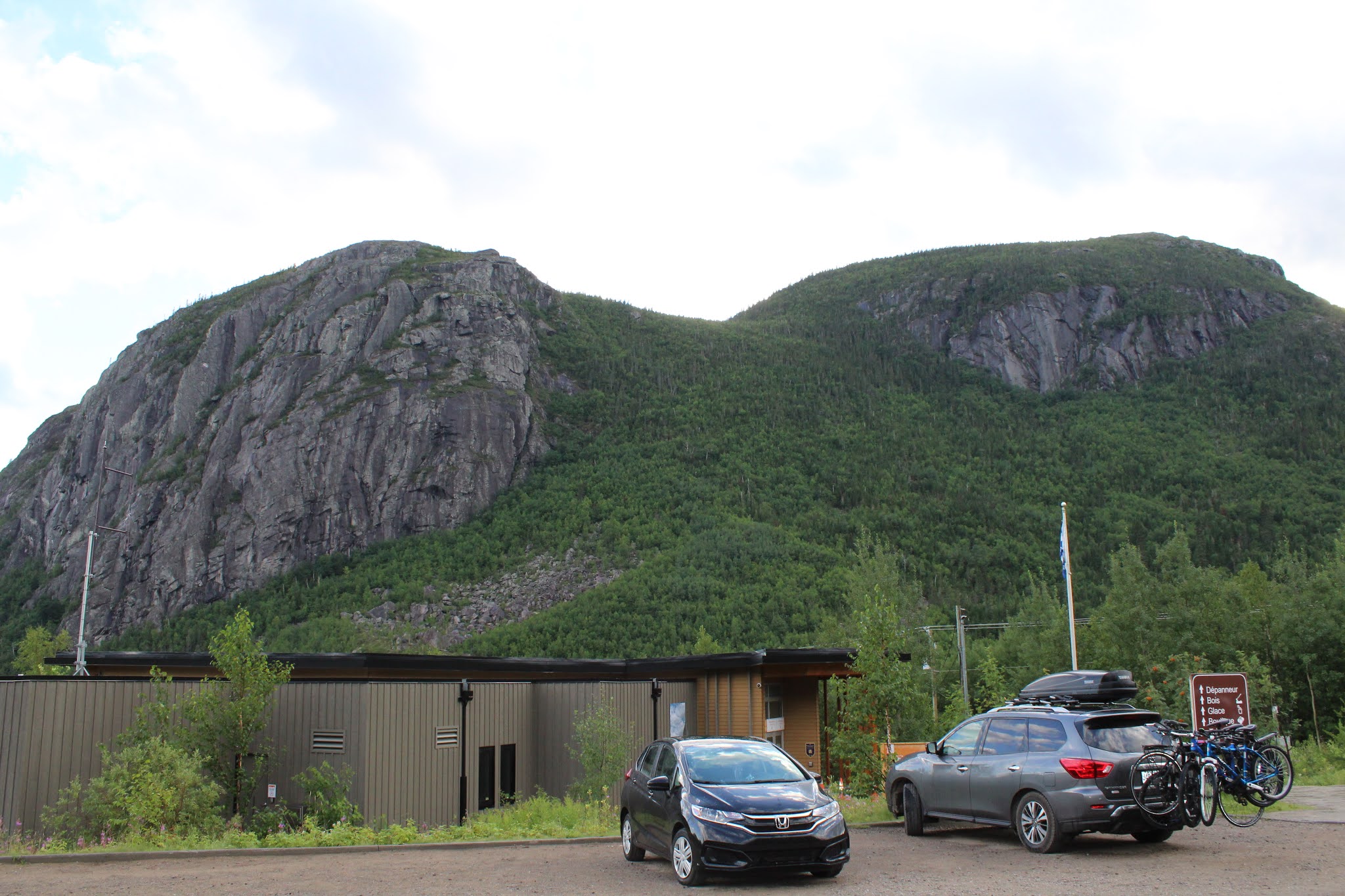
Sepaq Gaspésie Park Hike Chic choc, Mont Jacques Cartier, Mont St. Albert

MON TUE WED Canada Park Forillon 328

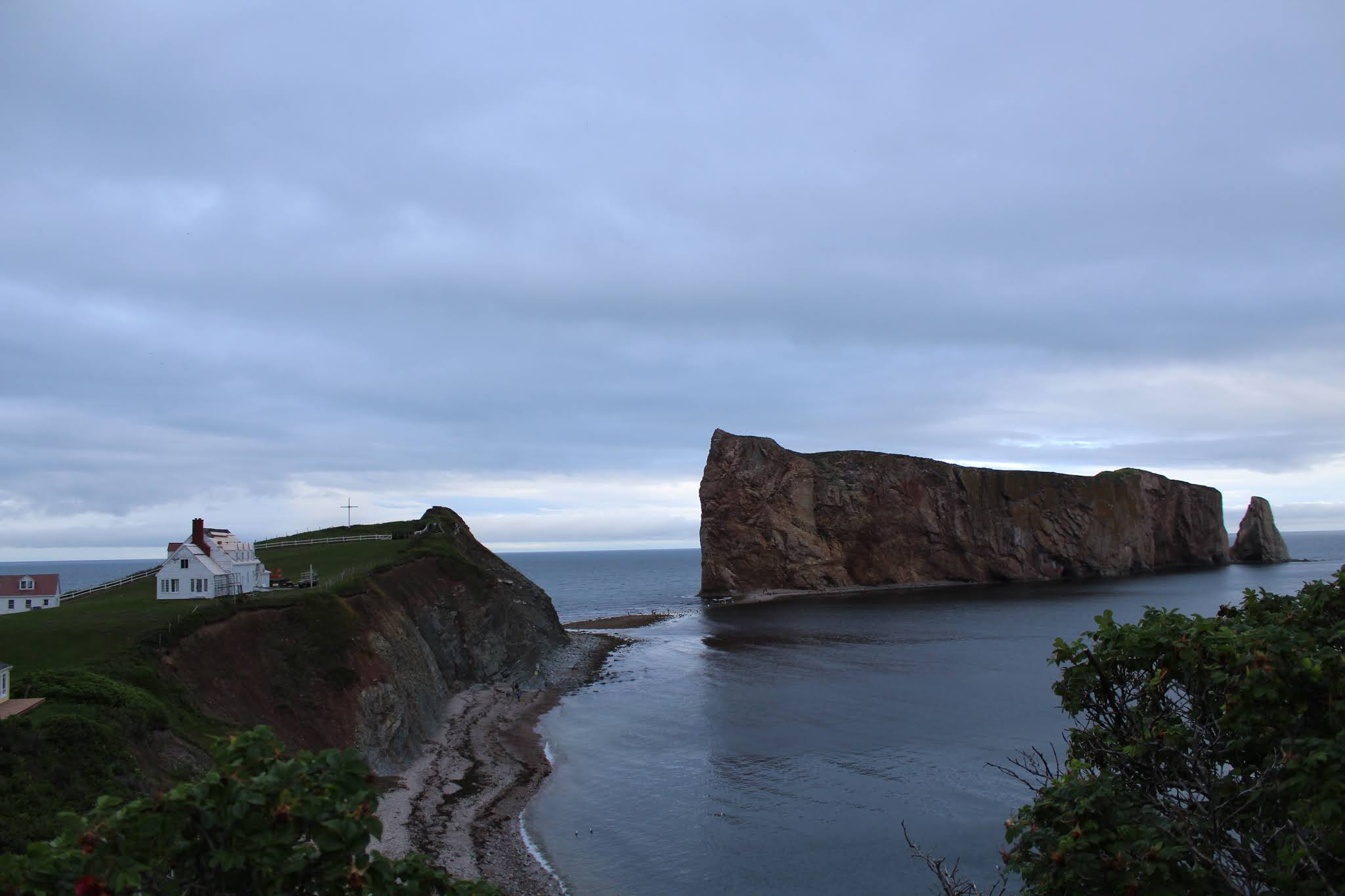
THU Percé

Sepaq Ile Bonaventure (gannett colony) 104k

FRI SAT Sepaq Miguasha

Baie de Chaleur

SUN MON Sepaq Park Bic 251k

TUE La Poc 155k

WED Levis 126k

Quebec Aquarium

THU Sepaq Yamaska Park 214k

Granby zoo

FRI home 100k

I was starting to get excited and booked us two places: one was tiny cute chalet at the Petit Miami in Metis-sur-mer that we had driven by 2-3 times in the past, and the second was a beautiful park that I would have stayed the week but I could only get one day, called Bic Park near Rimouski (muskrat in French), and the furthest east we would had ever been to date. When Canada parks figured it out, I would book Forillon, at the so-called Landsend, for one night, but I was beginning to worry. Instead of travelling slowly around the coast, with short drives, and long stays in natural settings, we were going to have to go were I could find a place to sleep, and I would have to leave without having every night prebooked, knowing that we might have to sleep in the car or drive back to Montreal in the end. 

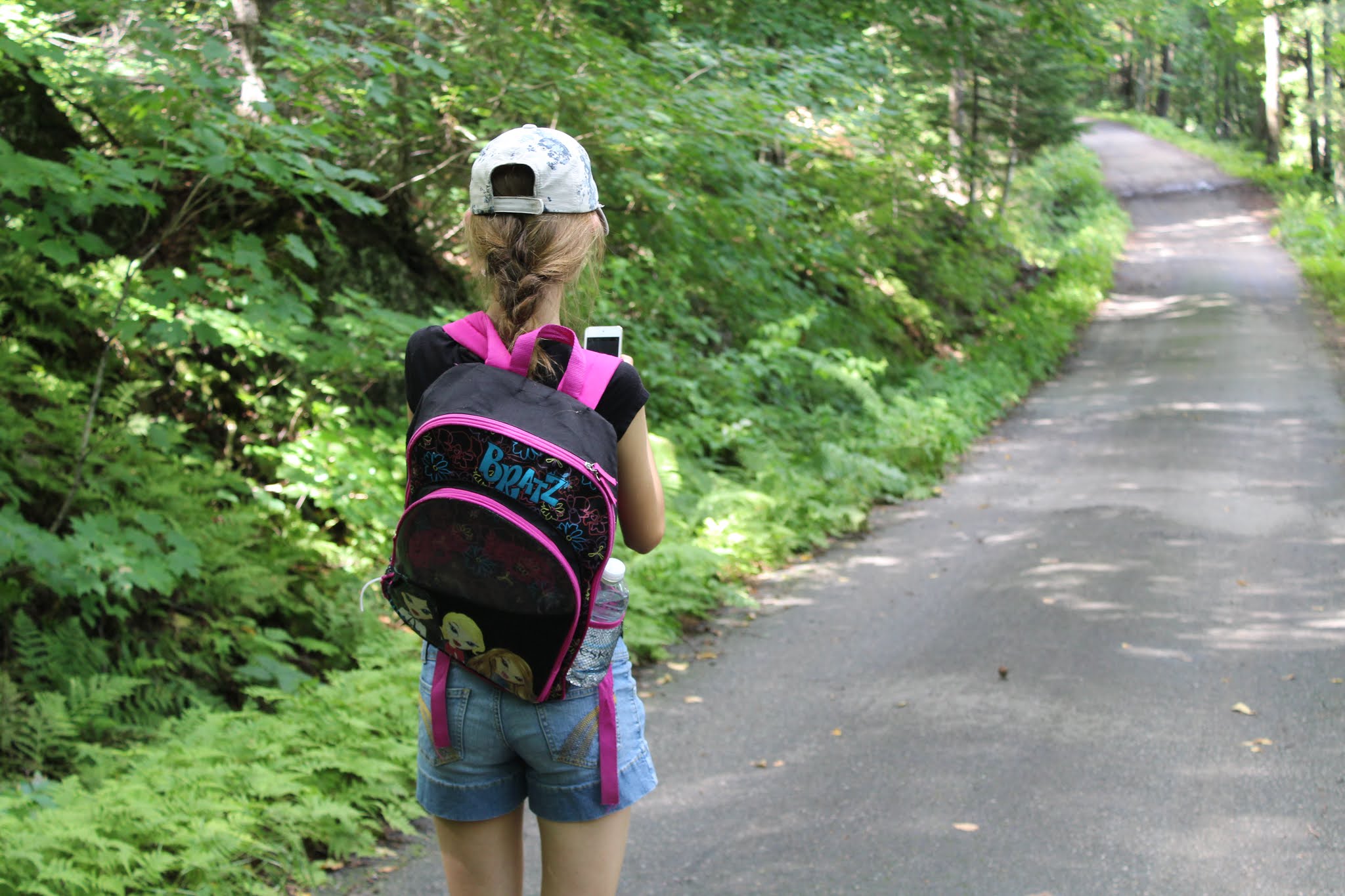
June 30th, we had hiked 15 k in a nearby park. We were going to be able to do some great hikes. Princess Pirate still had energy and went to get the mail. When she came to the back door, she burst into tears. She had twisted her ankle jumping off a construction gravel pile, and our trip was about to change. Four weeks in a walking boot and an ortho follow that was TBD. When we packed up the car, we had to debate whether or not to bring crutches, as she had not walked much beyond the perimeter of the yard by the day we left. PP insisted we take no ferries, and the time up the north coast of the peninsula was much faster than originally hoped, so it seemed that this trip was going to be up and around the coast for the first time. Cutting hikes and maybe having to return for an appointment in the middle made it clear that this was going to be more of driving vacation than a stay and play, so I started thinking about seeing some more details of the Bas St Laurent, with Kamouraska in mind from a book that had sat on my shelf for years that I took with me to read. The estuary islands looked interesting, but all required a ferry, so I had to put it on the backburner. Maybe Charlevoix could be possible if we had time after rounding the Gaspé, but we would have to backtrack to cross over at Quebec city to avoid the convenient ferry. On the Baie de Chaleur side, there was a Matapedia valley that was recommended, and if we had more time on the North shore, I wanted to show PP La Malbaie and return to the detour route 362 through the picturesque Baie-St.-Paul.  

Now that the trip is done, I can share the final itinerary. It was far more than I expected, and with a televisit confirming the cast could come off early in the second week, we made it around the peninsula, hiked in the Charlevoix (carefully), drove the Saguenay to Lac Saint Jean, and made it to the Mauricie park. I fell in love with parts of the green route, highway 132, and the system of roadstops that were everywhere!

On average a year in my 2013 car, I have driven the same distance as we did in the last 3 weeks; just over 7000 km.

Instead of 12 places, averaging 2 nights a place, we averaged 1 night a place, and stayed in 16 places. We had three days were we didn't know we were going to stay that night, and they all worked out beautifully. My favourite was meeting neighbours at the beach in St. Irenée and by noon we were on their parents' back deck. We circled back to La Pocatière because we were so happy there, and we stayed 3 days in Shawinigan to explore the park and finally stop moving for while! 

We spent 9 days camping (4 days on a flat mattress, not recommended!, once on grass with a view of the St. Laurence), 5 in a hotel, 2 in a motel (so many look that they have gone under in COVID era) and 4 in tiny chalets (everything, from a shack to a mansion is called a chalet in the la belle province!).

We swam in 3 lakes, waded into the estuary, saw seals, whales, and porcupines, watched the tide come in and out, camped and hiked in some beautiful forests, and watched moonrises, planets, stars, comets and the milky way!

This is the food I packed to start:

SAT Sepaq Voltigeurs (Drummondville) for lunch

Saint-Roch-des-Aulnaies


Auberge Cap Martin in La Pocatière

SUN Notre-Dame-du-Portage


Sepaq Bic Park


MON TUE Petit Miami chalet, Metis-sur-mer

Jardins des Metis/Reford Gardens


WED THU

Gaspé coast

Canada Forillon Park
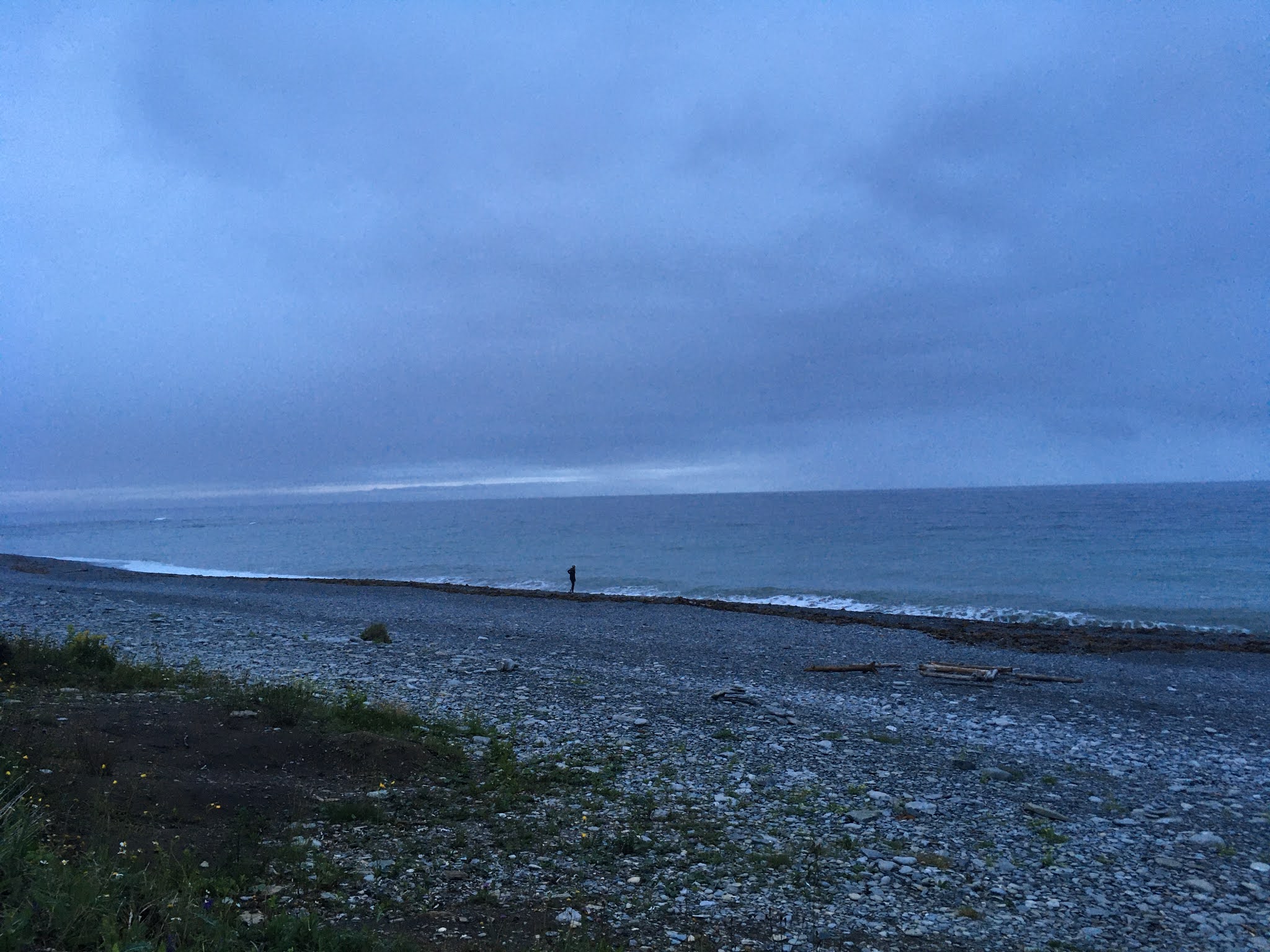


Free from the walking cast by distance telemedicine with orthopedics! Such freedom, such flexibility.

FRI Chalet la Plage, Percé


SAT Auberge Coulée Douce Chalet, Causapscal

SUN Sepaq Lac Temiscouata
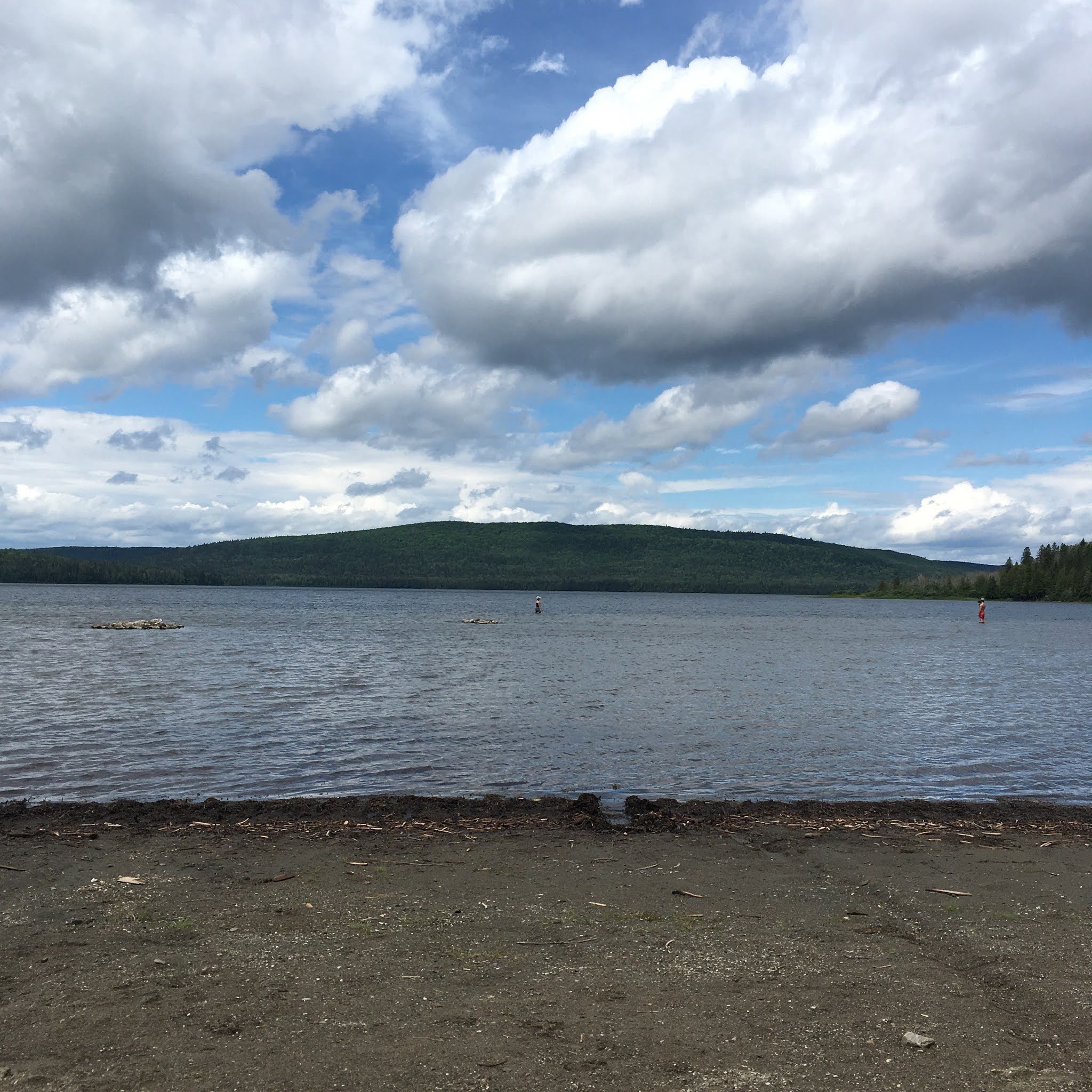
MON St Narcisse sur La Route des Monts Notre-Dame

Sepaq Bic Park bis


TUE Auberge Cap Martin in La Pocatière

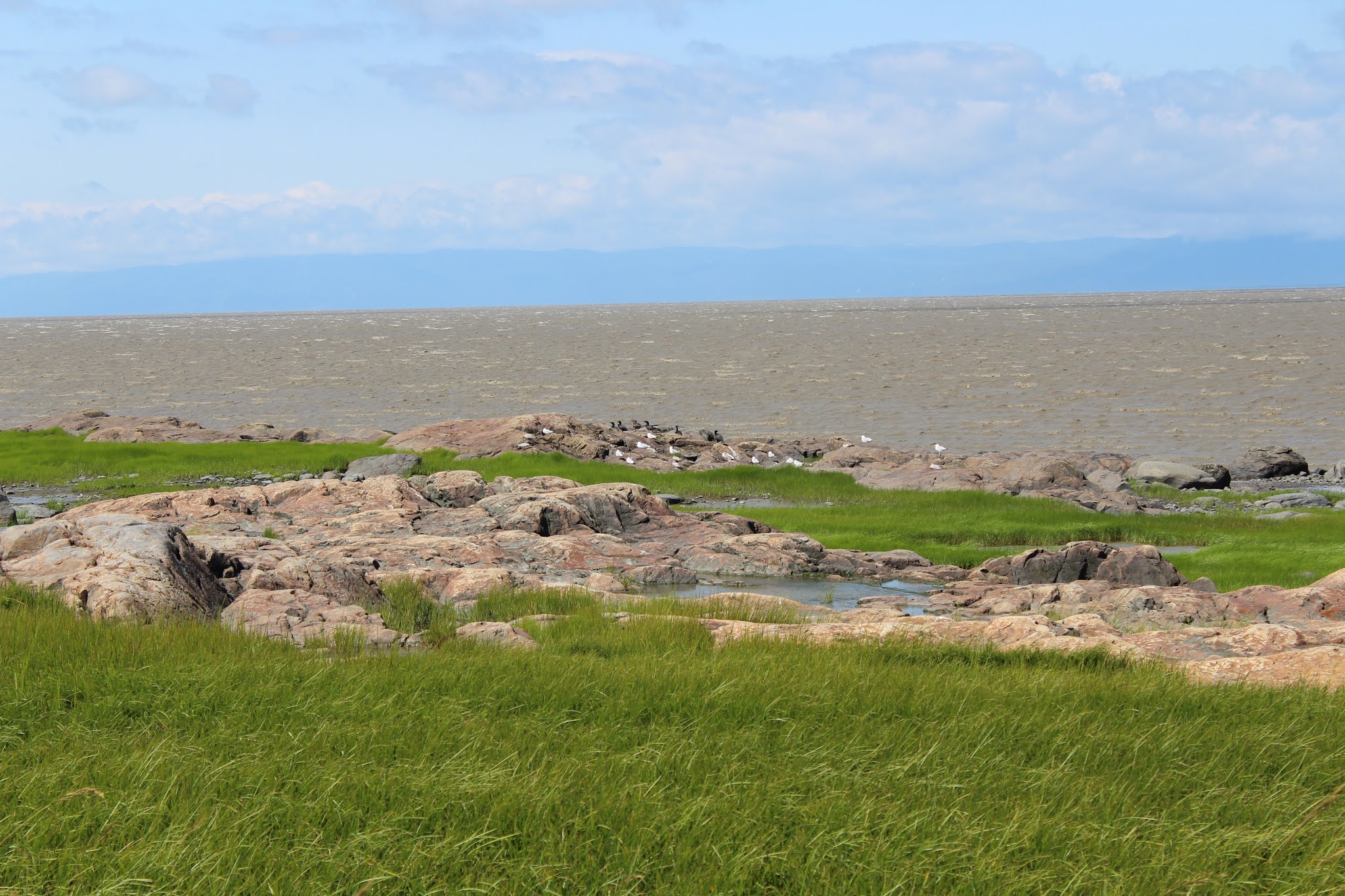

WED lunch at Berthier-sur-mer


Chutes Chaudières


Chutes Montmorency


chez Charly, Beaupré

THU Sepaq Grands Jardins


FRI Camping on our friend's dad's lawn, St. Irenée


Beach, Moonrise, shooting stars, campfire

SAT Saint Simeon minke whales

Petit Saguenay lunch, Baie Eternite hike


Lac St. Jean
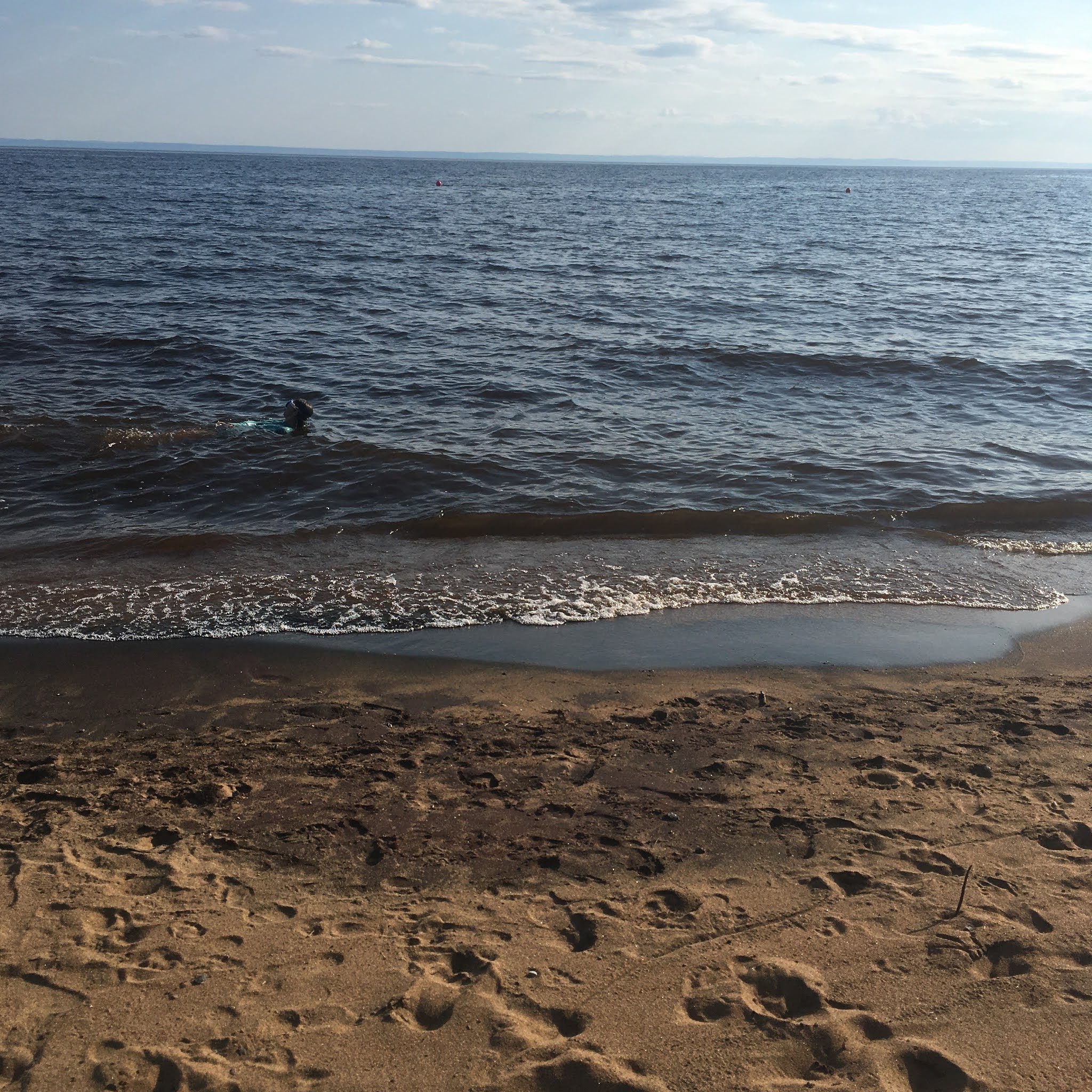


Jonquière Motel Princesse

SUN Camping St. Felicien


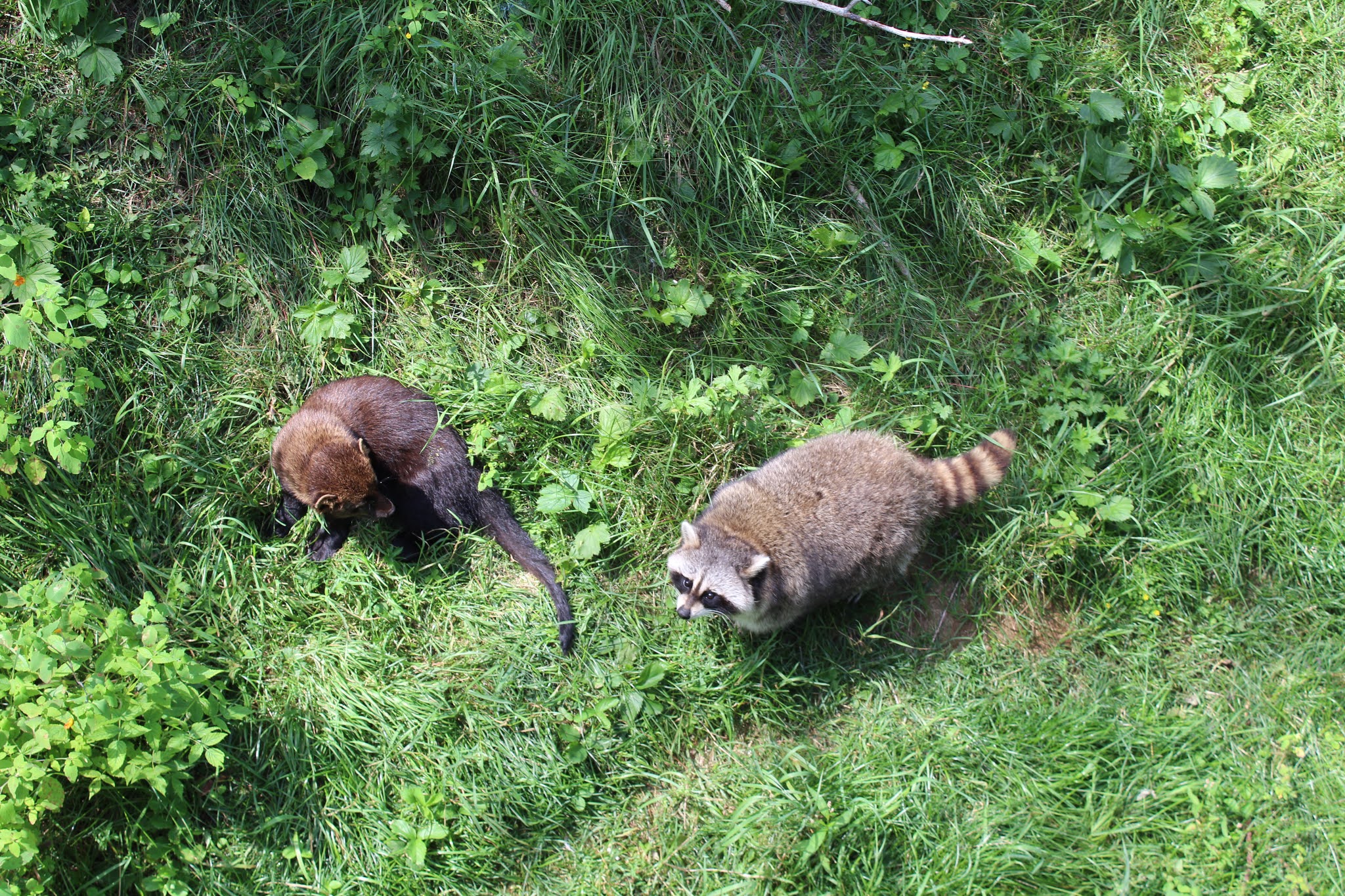
Zoo Saint Felicien


MON TUE WED Hotel des Gouverneurs, Shawinigan


Canada Park Mauricie


THU 

Nicolet boardwalk

 Sepaq Yamaska

Beach

On return to school September 9th , she was asked to give a short speech about our three week vacation. There was a list of some of the places we visited, a comment about not always knowing where we were going to sleep that night, and a lot about how much we loved the zoo, especially the safari train. I was able to hear the speech from the other room, but gave myself away laughing at her conclusion that loosely translated as : Three weeks in the same room as another person with no personal space can be pretty annoying!

Wednesday, July 22, 2020

WALK AFTER DARK

There is rain in the air. 
The leaves rustle in the trees.
The wind is a warm zephyr. 
A perfect temperature for a walk.
A hopeful cricket sings his symphony.
My feet crunch on the path. 
A car passes.
A skunk trundles away benignly in the grass.
I am happy in the shadows.
On a  lighted path in the woods.
Lights on a blue pool waver.
Men talk on a park bench.
Everything is peaceful.
The day is ending for most.
My workday begins.

Sunday, July 19, 2020

UNCLE


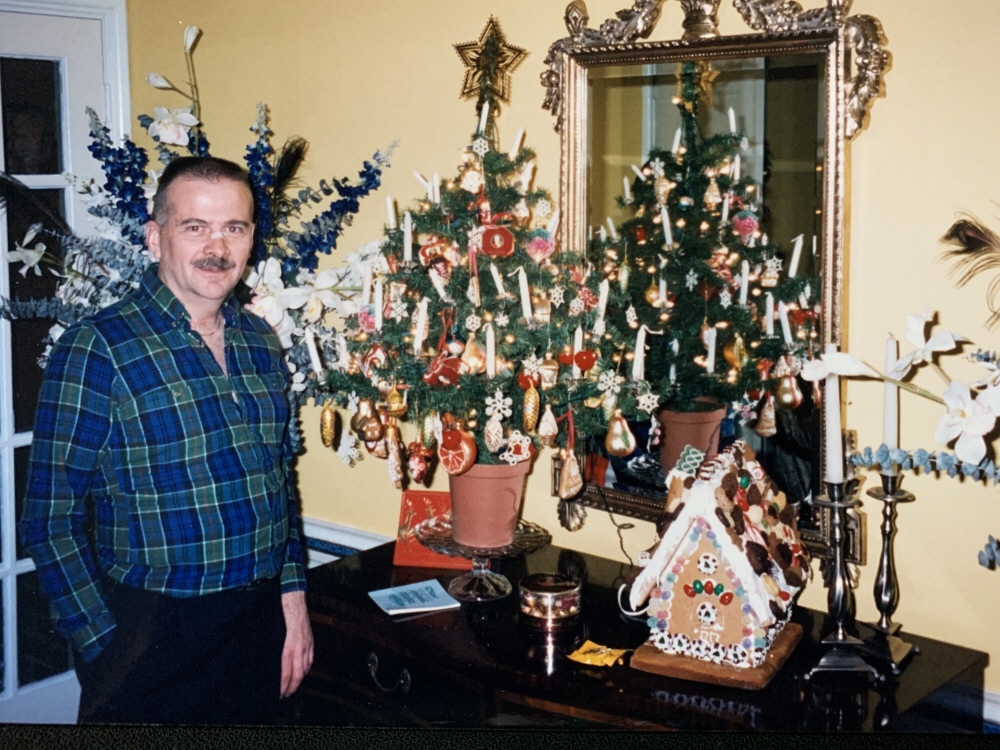
My Uncle was an artist, who carefully made things beautiful. Whether it was a gift for Christmas, the table for dinner, or a letter, he designed it and executed it like only his artistic soul could do. He was most like my Grandma, with a rare photograph posed. Usually he was making a smart remark or laughing.
He travelled a lot, created and loved art, and was an amazing host.

He was taken in the span of a night. I am grateful that his life partner was there that night. I am sure it was traumatic for Joe, and being a gay couple living in adjacent States did not make it easy on him. The police wanted to talk to a relative with his last name, a final injustice to his gay partnership, so he had to call me in the middle of the night instead of being recognized as his next of kin. Later, he had to go in with local friends to again identify him for the State.  

My uncle had a heart attack over a year ago, remarkable for two things that he joked about in his sardonic way: he went to the ER by bus, and they put in 4 stents, which even as a radiology illustrator, he knew wasn't right. His dad may have died of a sudden cardiac death in the decade before him, but I think it was a longer night for Grandma who woke to Grandpa’s respiratory distress, and may have even been a pulmonary cause in discussions about it since, as I recently understood he was known to have “phlebitis”.

I had hoped to introduce my daughter to her great uncle in person one day, and attend another VCU French Festival together, post COVID, but it was not to be. Our last conversations were by email, with my parents version of American Gothic making him laugh.

Afterwards, his tribute page was filled with art, just as it is right to be. He was a funny, generous, smart, quick-witted, irreverent, lovely man. He was a bright light in a dreary world. I will miss him very much.

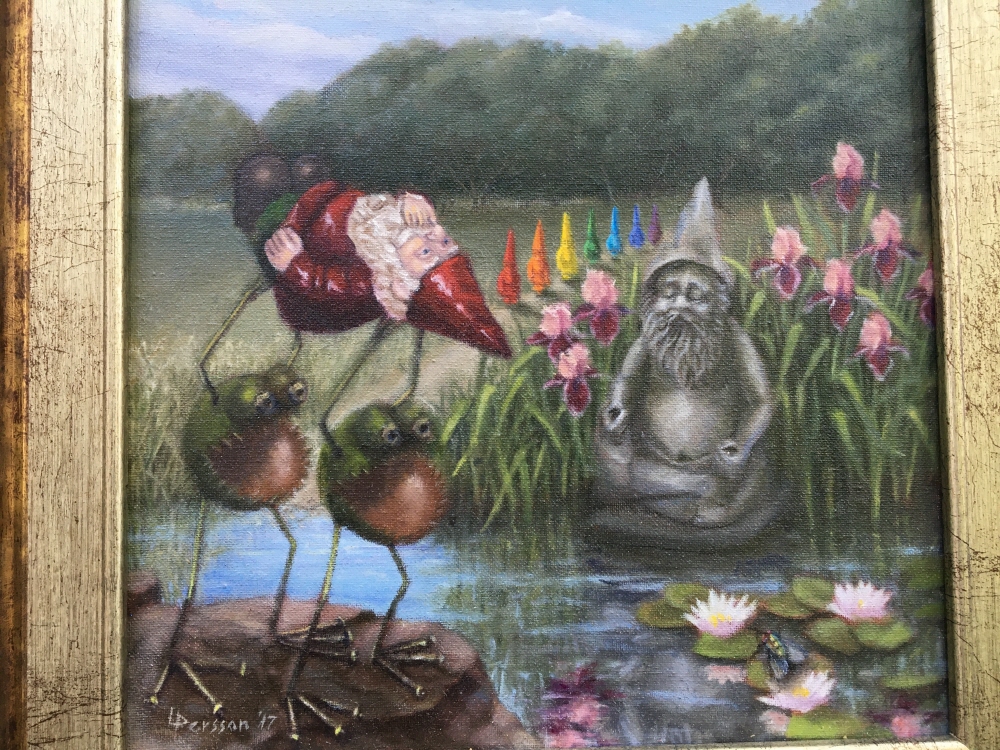
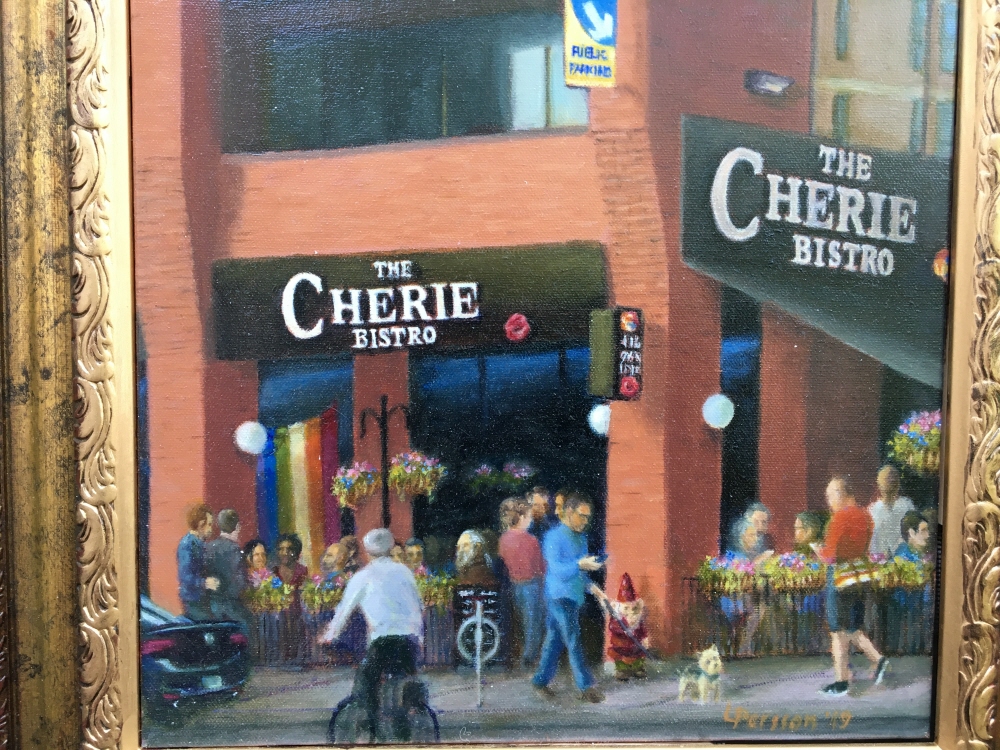
From his Christmas Card collection:


Here are some pictures in his legacy:


Saturday, July 11, 2020

PATHS OF DESIRE

Our local Metro paper has almost completely disappeared, as have the crowds on public transportation, but I found a copy this week on a recent commute. There was a picture of a little kid on a trail very familiar crisscrossing the area around the hub of metro Lionel Groulx, now named after Rollande Danis-Pelletier (the first park named after I female that I recall seeing in Montreal, inaugurated in 2017). I didn't know a term in English to compare except for maybe a deer path. The caption called it "une ligne de desir". Wikipedia has an entry under the term, "desire path". I have always love-hated them. 

I have been enough places with fragile environments, respected the idea of "leave no trace" and seen enough destruction that is wholly human to be angered and disappointed by those who don't stay on the path. This is critical in forests and on trails that are increasingly travelled, but in the city it feels different, and the "desire paths" feel more inspirational for new type of design. If the paths were driven organically from the start, how would the park look then? The potential for inspiration is exciting.

Here are a few photos collated from Flickr.

If the website is accurate, it only takes 15 people to create a visible path. Follow the path if you honour the vegetation. I hope you do in the wild. In the city, it would be so interesting to follow the desire paths, and see pathways that arcade in the way that people have walked them, instead of how a planner thought they should walked. Maybe Parc Rollande Danis-Pelletier is a great place to start!


Saturday, July 4, 2020

MYTHS AND ORIGIN STORIES

I am having the most fun reading with my daughter. She tore through Percy Jackson's books, and have read and reread the stories of heroes and gods that are companion tomes. I have read the Greek heroes one over the last weeks, and I was most surprised by the many details of the the demigoddess Psyche. Many of the ideas are the origins of classic Disney movies - the jealousy of a vain witch (Snow White), a sleeping curse (Sleeping Beauty), a beast (at least she thinks he is a beasts who hides his ugliness in the night but is actually the handsome Eros) (Beauty and the Beast), terrible sisters (Cinderella), and locked up in a tower (Rapunzel). 

I have told the story of the Israelites leaving Egypt in the Exodus to my daughter dozens of times. It's such a great story with so many layers. Now we saw a celebrity archeologist, Albert Lin, map out where and how that may have happened. (It was the "reed" sea, not the Red Sea, for starters.)

I am reading the Magician's Nephew, and the uncle is very creepy. But it increases my realization that great storytellers steal ideas, and  that great ideas change the narrative of storytellers from then on. From the magic rings harkening back to LOTR, and an evil queen with an enchantment lasting 1000 years, and creatures turned to statues like the effect Medusa has on those unlucky enough to look at her, he has borrowed from many great stories to make another. He describes the magician uncle as having a mop of grey hair, like the Professor Drosselmeyer in our local ballet's performance of the Nutcracker. The idea of magic being given to common people is scoffed at by the evil queen, and I think of the muggle Hermione as the exception to Hogwarts. Even this origin story of the land of Narnia is blatantly the creation as told in Genesis.

I don't know why stories are so important to me. I know that being introduced to the Greek myths in my 40s is late. I know my daughter doesn't have the same uniform exposure to the stories I grew up with. The Disney princesses that were my generation's stories were too upsetting, and the catechism of common knowledge doesn't exist anymore with the endless options on the internet. We had Sunday night 6 oclock for the Wonderful World of Disney, and Sunday School version of the Bible. 

There are more important things that I need to understand to teach her, but I love that right now, with the pressure of school gone for the summer, and lessened by the months since Covid quarantine, we have time to read and tell stories. 

HAMILTON

I have heard about Hamilton for a couple of years, and have looked a couple of times at the possibility of seeing it, but in addition to baulking at the price, I never made it to a city where I had the chance to watch it. So when an ad popped up that it was going to be on Disney plus, where I had been watching Winnie-the-Pooh a little too often with my daughter, I was thrilled. I realized that one of my reservations was that no matter where I saw it, it wouldn't be the original cast, but this version, filmed in 2017, made it possible to turn back time.

I am bowled over by the production. It is a simple idea. Follow the life of an extraordinary man in extraordinary times. The storytelling is compelling. Start strong, introduce him by his friends and enemies, teach us something, move us with his brilliance and flaws. He is a hero, writing his legacy without knowing anyone would remember him. Desperate to make a difference, he is told he shouldn't be so honest, so driven, so much. He has to swallow condescension and racism to prove himself. He is passionate and too loud and immodest. Even if we had no idea who he was at the beginning, we are convinced about his influence during the birth of America, and it's hard not to finish the musical without liking, or admiring the man.

It's a timely piece with our own revolution happening with #blacklives matters. It's a refreshing change to have so many major players in the script being actors of colour. Washington, Lafayette, Hamilton, and Madison are reinterpreted, but the imagination ends within the male gender. I can't help but be sad for the superficial treatment of women and their general irrelevance. They are dressed in their corsets or ball gowns, serving as sex objects or chattel. The closest we get is Angelica singing about asking Thomas Jefferson for a sequel for women when the revolution results in equalizing all men. 

Still, the cast is half men and half women, and although their roles are smaller, the unrequited love of Angelica, and the forgiveness and grief of Elizabeth make the story richer and brought me to tears on several occasions. There are moments of total camaraderie, bald truth, verbal sparing, admirable character, and even levity. Even the moment of his death is so original, I will not spoil it for those who have yet to watch. Needless to say, time slows down, and I have never seen such a powerful idea for that climactic moment.

It has struck me in the past that if you don't have any good ideas to write a great story, another option is to find a great story and try your hand at telling it your way. Here Lin-Manuel knocks it out of the park. Sure, Hamilton's story is magic with his writing. There is no guarantee that even a good story is enough in a writer's hands. 

So how would the story look if a woman had her story told? Who would the story about? What if Hamilton was the story of Elizabeth? What do you do about the dearth of historical data when the story, even today, is written about males for males, even by females. 

What would a musical look like about Kim Campbell? Marie Curie? Irma LaVasseur? Suffragettes? Wives who stood behind their important husbands? Victims of sexual abuse? Rebels? Ordinary unsuccessful women at a certain era? 

What I think is that an all woman cast would not be the same draw, and that troubles me a lot. I know I am mistaken by many men, but also women as NOT the doctor, because of my gender. I know that I would rather watch men's basketball and tennis than women's. Ninja warrior and the Olympics are a relief in those exceptions. 

I had a flash on a zoom meeting with friends that we could all share our experiences as they hold significant jobs in many essential businesses, and solve some of the world's problems, but instead we spend another week listening to how to clean the house, and how great their families' meals are, and the new gym regime. We have our equality sometimes at work, but not in the rest of our life. Is it learned helplessness?

So I go to bed with lots of ideas and inspiration and frustration, but I can singularly applaud and recommend this tremendous work of art called Hamilton. Bravo! Brava!

EDITOR'S NOTE:
I have watched the musical so much that I have to watch my download monthly limit only 4 days into the month! Fortunately my brother mentioned the possibility of downloading to my phone after I looked at buying the soundtrack, but the audio wasn't the same. This way I only have to download data once, and I can continue to feed my addiction of this earworm of theatre.  I have also found the script: Act I and Act II. I persuaded Princess Pirate to watch the first scene, and the King George scene "You'll be back" that is followed by "Right Hand Man", which she asked to keep watching when it came to it. Both scenes are genius! To have a a genius script filled out with brilliant acting (and directing?) is over-the-top. Hilarious and true with the subtlest and most flamboyant of expressions! Jonathon Groff is amazing!

Other fascinations: A play exists called Hamilton based in 1917, and a movie called Alexander Hamilton was produced in 1931. Lin-Manuel Miranda was reading Alexander Hamilton by Ron Chernow, and by the second chapter he felt he was reading the story of a hiphop artist, and "hip-hop songs started rising from the page", just as the story reminded him of his dad, and the immigrant story emerged.

Notable are the stats of the word counts - 144 words per minute with a total of 20, 520 total, with Phantom of the Opera at the next highest word count at 6,789, averaging 68 words a minute.

The Hamilton Letters didn't have everything I was looking for, but the Reynold's Papers are a great example as how obfuscating his writing could be, when he was passionately trying to be clear, and it was fun to see his commentary on the Quebec Bill!

 So many great lines, but to quote the first president:

"Dying is easy, young man. Living is harder. ", says George Washington.
"Winning was easy, young man. Governing's harder."

Thursday, June 25, 2020

QTRADE LEARNING CURVE

DRIP
Activate if dividend earned can cover enough stock to cover (check account hisotry for 
Inactivate before selling, ideally at time of last dividend (or expect residual)
use "My accounts" tab
select "service center"
under "additional services"
Choose the eligible security and agree to the terms and conditions.

BUY EQUITY
use "trade" tab
select "equity"
see right for glossary of terms
watch tutorial arrow available to far right
to buy US, call to determine the exchange rate at present
Alternatively, open new US account to avoid further conversion complications. Transfer of funds can be in kind with no further cost.
All orders can be good through that day, as orders are immediate, even if electronic transfer of funds lags 24-48 hours.
Trades on the weekends have no backup service (M-F 8-5, even during Canadian holidays).

Tuesday, June 23, 2020

BILINGUALISM DEFINED

I was listening to a TED talk called the Benefits of a Bilingual Brain, and I finally have a way to define myself. I am a subordinate bilingual!

I recently worked with a trainee from my home town, and he described the difficulties of working in two languages from a unilingual culture. I described my bilingualism as being incomplete, but joked that he would be happy to discover, that when he returned home, he might be seen closer to bilingual than he was here.

Mia Nacamulli explains that language is made up of 4 parts. Two active parts are speaking and writing. Two passive parts are listening and reading. A balanced bilingual has near equal ability across the board in two languages. Most bilinguals, however, vary in their use and knowledge. 

She breaks the bilingual/multilingual phenomenon into 3 categories based on how they acquire language. There are differences in the brain that occur depending on how and when the acquisition occurs.

The COMPOUND bilingual processes two linguistic codes simultaneously, and leads to the CRITICAL PERIOD HYPOTHESIS, involving both hemispheres in language acquisition.

Both COORDINATE and SUBORDINATE bilinguals lateralize language to one hemisphere, usually the left.  While the coordinate bilingual works with two sets of concepts, subordinate bilinguals learn a secondary language by filtering it through their primary language.

These differences are paralleled to phases of life. While becoming bilingual as a child, compound bilinguals develop. As a teen, coordinate bilinguals learn. As an adult, subordinate bilinguals develop.

It is clear that we can all become bilingual. While children have plasticity to their advantage, all of us can acquire additional languages. 

Interesting advantages include brain health, with delay of Alzheimer's and dementia by as much as five years. The adult may exhibit less emotional bias and a more rational approach when confronting problmes in the second language than in their native one. I definitely can confirm this to be true for myself, and have switched the argument to french in order to temper my words, by both slowing them done and keeping the argument less personal, and closer to the basic issues at hand. It also seems that bilingual students, while showing increased reaction time and errors, have great effort and attention, triggering more activity in the dorsolateral prefrontal cortex, which plays a role in executive function, problem solving, switching between tasks, and focusing while filtering out irrelevant information.


Monday, June 15, 2020

SUMMER PLANS- CANCELLED

Fireworks festival
June 20-July 29

STEWART MUSEUM AND FIREWORKS
Wednesday 5-10 pm

Montgolfieres St Jean sur Richelieu
August 8-16

Asteroid shower
peak August 9-13

SK VS MTL
Percival Stadium August 13 5 pm

TRAIN: book tuesdays

NYC
bus: greyhound vs Adirondack pool, Thursday least busy, buy in advance


Friday, June 12, 2020

THE TONES OF AN OCTAVE AND A SECRET CHORD

My grandma was the greatest musician that I have ever known. She seemed to understand it effortlessly, and could transpose music from one key to the next like magic. She took a single note, and made it a chord, and progressed chords effortlessly with the left hand accentuating the right endlessly. I never got how she did it, so it was always like magic, and I could only admire it.

I only learned to play by reading the notes of sheet music, and translating it to simple music. I didn't have the ear to sing harmony to the melody unless someone was strongly influencing me, in spite of an alto voice that often strained to the higher notes a melody required. I can hear a few tones, and pick out a melody with difficulty, but I can't play by ear beyond the most basic of phrases.

I have looked at the theory, and marvelled at styles of music. I have tried to hear the structure of jazz music that I have heard is predictable. Now, in addition,  I marvel at the math of it.

Ever wonder why the piano has octaves? Why there are less black keys than white? I didn't until I saw an instrument of 5 keys played in Burkina Faso. It didn't make sense how they could play music with less keys. It was the same kind of magic that my grandmother, in her living room, high on her organ, would make. The music was made for the collective, but I never knew how it was possible.

Turns out, the ear likes to hear distinct notes, and there are only a few made with sound waves that make sense. In fact, the notes separated by an octave are double, or half of the other's frequency.
 
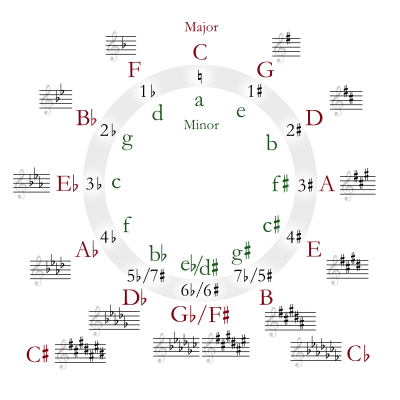
Similarly, there is symmetry in the sound waves of a fifth. This recently came to my attentions when I reviewed a book of sheet music I had received when I bought a synthesizer 20 years ago. At the back of the book was a diagram called the Circle of Fifths


The circle of fifths represents the relationship between the twelve tones (7 white keys, 5 black) of an octave. It takes 7 half steps, or tones, to span a "perfect fifth". Counting clockwise, and starting at the top with C, the perfect fifth of C is G, of G is D, of D is A etc. After B major, I start to get a little confused, but this is a chart that helps explain more of chord progression.

FREE download!!! Major Key Chord Chart ♫ A very handy reference ...


It turns out that scales can make an octave contain 4, 5, 6, 7, 8 or 12 different pitches

Within an octave, there are predictable ratios:

             1/1  unison              C
             2/1  octave              C

             3/2  perfect fifth       G
             4/3  fourth              F
 
             5/4  major third         E
             8/5  minor 6th           Ab

             6/5  minor 3rd           Eb
             5/3  major 6th           A

             9/8  major 2nd           D
             16/9 minor 7th           Bb

             15/8  major 7th          B
             16/15 minor 2nd          C#

It all makes me think of the incredibly beautiful Leonard Cohen song, Hallelujah, and the lyrics he sings in the first chorus while King David, a man after God's own heart, a musician, and an adulterer figures out the chord progression of the song:

Now, I've heard there was a secret chord
That David played, and it pleased the Lord
But you don't really care for music, do you?
It goes like this, the fourth, the fifth
The minor fall, the major lift
The baffled king composing Hallelujah

Hallelujah
Hallelujah
Hallelujah
Hallelujah

Saturday, June 6, 2020

#BLACKLIVESMATTER

It is a terrible thing that happened to George Floyd, and it is more terrible that this keeps happening over and over again.

I want to blame culture, so that it is the police culture at fault, or the american culture, or the culture of slavery or white entitlement, but the reality is that it was humans that took that man's life, and it's a dishonour to humanity to not value another being enough. It is always difficult to understand our duality, and how the human being can do the most beautiful thing, and then the most vile.

It has been another reason to reflect on ourselves, and understand the things we may not be seeing or need education on. We all have to look at the dark part of ourselves, to make choices.

Here are few thoughts about our ego and by extension our culture's shadows by Carl Jung.

Friedrich Nietzsche wrote something in Beyond Good and Evil (Aphorism 146) that I reflect on often in my job in the system of health care.

"Wer mit Ungeheuern kämpft, mag zusehn, dass er nicht dabei zum Ungeheuer wird. Und wenn du lange in einen Abgrund blickst, blickt der Abgrund auch in dich hinein."

Translation: He who fights with monsters should look to it that he himself does not become a monster. And if you gaze long into an abyss, the abyss also gazes into you.

I gave my daughter her allowance, and it had Viola Desmond on the bill. I realized I didn't have any other Canadian stories about important black women to tell than this one. So when I saw this article titled Why the Black struggle in Canada has all but been erased that ended with a bibliography, I wanted to list here some places to start.

Documentaries
The Little Black School House
Speak It! From The Heart of Black Nova Scotia
Speakers for the Dead
Journey to Justice
Sisters in the Struggle
It Takes A Riot: Race, Rebellion, Reform
Speakers for the Dead

Books and Documents
“’Membering” Austin Clarke
“The Hanging of Angélique: The Untold Story of Canadian Slavery and the Burning of Old Montréal” Afua Cooper
“Moving Beyond Borders: A History of Black Canadian and Caribbean Women in the Diaspora” Karen Flynn
“Bromley, tireless fighter for just causes: Memoirs of Bromley L. Armstrong” Bromley Armstrong
“Burnley ‘Rocky’ Jones Revolutionary” James Walker and Burnley ‘Rocky’ Jones
“Being Brown” Rosemary Brown
“Bread Out of Stone: Recollections, Sex, Recognitions, Race, Dreaming, Politics” Dionne Brand
“Silenced” Makeda Silvera
“A Place Called Heaven” Cecil Foster
“After Canaan: Essays on Race, Writing and Region” Wayde Compton
“The Black Prairie Archives: An Anthology” Karina Vernon
“Race to Trial: Black Defendants in Ontario’s Criminal Courts 1858-1958” Barrington Walker
“Fear of a Black Nation: Race, Sex, and Security in Sixties Montreal” David Austin
“Displacing Blackness: Planning, Power, and Race in Twentieth-Century Halifax” Ted Rutland
“Policing Black Lives — State Violence in Canada from Slavery to the Present” Robin Maynard
Children’s books
“Meet Viola Desmond” Elizabeth MacLeod and Mike Deas
“The ABC’s of Viola Desmond” Delmore “Buddy” Daye
“They Call Me George: The Untold Story of Black Train Porters and the Birth of Modern Canada” Cecil Foster

Canadian Historical Sites And Museums
Buxton National Historic Site and Museum Chatham-Kent
Black Cultural Centre for Nova Scotia
The Black Loyalist Heritage Centre Nova Scotia
The Amherstburg Freedom Museum Ontario
Africville Heritage Museum Nova Scotia

Here is a CBC radio show from Ideas in the Afternoon about the "Snow-job" of "whiting out" the history of Canada in Black Slavery.

DATING TRAPS

From Always a Bridesmaid a so-so movie with a lot of familiar actors
MICRODATING - clandestinely flirts with you, and others (all the sauce but sharing the flavour)
LOVEBOMBER - Dr Jekyl - way too much, way too soon - soon enough you will meet Mr. Hyde
TEXTATIONSHIP - entire relationship by text
SIDEBAR - loves his devices more than you
(CYRANO DE) BERGERAC- dating by committee

Friday, June 5, 2020

IRONY OF INSOMNIA

My street is under construction, and I wake every weekday, if I am lucky, at 7 am with my house shaking, the rumbling of the trucks, and the reverse beeping of vehicles that are doing the work. I never knew that the tractors and trucks were only ever driven backwards during a job, but it is a rare reprieve to have just the rumbling of the wheels, or the squeaking of the bulldozer tracks. Even though they wait to 7 am to start, they arrive earlier, and are either used to shouting over the machinery or deaf from the years of unprotected exposure, that I hear them yelling before the machines are allowed to start up.

This is overdue, and it will end the front ditch flooding for the near future, and I am grateful for that. But for a night owl that prefers to go to bed at midnight, leaving less than 7 hours of sleep, or a shift worker that often needs to sleep in the day to make it through the nights, it is rough. It's pretty motivating to live within the time constraints they set, but this week they are working ten-eleven hour days, leaving very little peace left in the day.

So last night, after a few nights of less than seven hours sleep, I determined to go to bed "ridiculously early" at 22:30. Then I woke up at 3:15, very aware of the irony of having the peace to sleep, but the pressure to sleep lead to insomnia. As the hours passes, the impending inevitability of the construction crew's arrival at 7 grew.

At 4:30, the first birds started chirping. Soon after five, the sun rose, spilling light around the blinds, and intensifying the frustration of sleep. By now I had unblocked multiple apps on my phone in order to override the screen time refusals programmed from 23-7 am. I solved a daily puzzle, checked my work schedule, wrote an overdue email, caught up on  facebook.

I sleepily pawed through my bedside table to find a complimentary gift of an eyecover from Air Canada; a remnant of heady days of travel, and found the room black. It was 6:30 now, but it was only after the first earthquakes started that I was able to fall asleep, half tuned to wake if Princess Pirate was. The next hour of sleep should have been terrible, but it was just what I needed.

Like most anxiety, insomnia is worse for the disproportion of reality. The dread is worse than the disease, or, in this case, the disease itself.

Monday, June 1, 2020

BUMBLEBEES


Bumblebee

Scientific Name:
Bombini

Genus:
Bombus

Family:
Apidae

 Fun Facts:
They are larger than honeybees, but they don’t produce as much honey!

They are great at pollination because their large bodies and fast wings, beating 130 times or more per second, helps vibrate flowers into releasing pollen. This is called “buzz pollination”. It helps plants produce more fruit.

There are over 255 species of bumble bees!

It has been said that bumblebees defy aerodynamics, and should not be able to fly. Closer study revealed that they flap their tiny wings back and forth rather than up and down, creating vortices (small spiral winds) that keep eddies of air above its wings to help it stay aloft.

The largest bumblebee is found in Argentina and Chile.

Bumble bees usually build their nests close to the ground, often under piles of wood, dead leaves, and compost piles, and sometimes even underground in abandoned rodent tunnels.

A group of bees is called a colony, and they live in social groups of 50 to 500. The dominant female becomes the queen, and rules the colony. During the late fall, the entire colony dies, except for the queen who hibernates underground over the winter and starts a new colony in the spring.

They can travel up to 54 km/hour!

The queen, waking from hibernation, finds food and then looks for a good location for a nest. Once a nest is found, she lays her eggs and stores up food. Bees hatch from eggs, which the solitary queen sits on for two weeks to keep them warm, shivering to generate heat, until they become larvae. Then the larvae spin cocoons and develop into adult bees. This is the only batch of babies the queen will take care of. The rest are laid by her, but the worker bees clean and guard the next, find food, and take care of the next batches of baby bees.

Bees born late in the summer are either males, also called drones, or females, which are future queen bees. They both leave the nests when they are mature. Males and females mate. The males die, and the future queens fatten up to hibernate through the winter.

Bumblebees don’t die when they sting, as they have no barbs, and can sting repeatedly without injuring themselves. Honeybees sting with barbs that need to be removed, and in doing so, are harmed.

Their generic name Bombus comes from ancient Greek, Bombos, meaning buzz. An old provincial name is Dumbledore, the wizard headmaster in Harry Potter, but JRR Tolkien used it first in a poem called Errantry.


 Its ecosystem pyramid:
Nectar and pollen from flowers
Bumble bee
Badgers, Robberflies and beewolves, bee-eater birds, shrikes, and great tits, camouflaged crab spiders
Beemoth larvae are laid in bumblebee nests as eggs, so that may feed on bumblebee eggs, larvae and pupae
Parasites: tracheal mites, protzoans, microsporidians, and nematode, and deformed wing viruses

 What it eats:
Bumblebees eat nectar and pollen. The nectar is for energy and the pollen provides protein. They make honey by chewing the pollen and mixing it with the saliva. They visit the same patches of flowers everyday, usually within 1-2 km of their colony.

 Range:
Bumblebees like temperate climates, and are often found at higher latitudes and altitudes than other bees. They are found in all continents except Oceania.

 Type of Habitat: (photo)

Cool, open, flower-rich habitats, with long but predictable adverse seasons, like north temperate grasslands and subalpine meadows.

 Photo of creature:


Land, air or water creature:
Land and air

 Cousin:
Apini, honey bees

 Prehistoric ancestors:
The fossil record is incomplete, and the documentation poor, but there may be up to 11 specimens that have been found dating from the Oligocene era in the USA and Turkey, but  3 species from the Miocene and Eocene eras have been better confirmed in Germany, Spain, and England.

Bibliography
https://www.livescience.com/57509-bumblebee-facts.html
https://en.wikipedia.org/wiki/Bumblebee