Monday, May 22, 2023

TRAVELS WITH CHARLEY

My eighty year old neighbour lent me this book to read, and I have taken on a last minute, overdue trip to celebrate a belated 50 year birthday with high school classmates who all reached this milestone in the midst of the only pandemic we have ever lived through. 

It’s a fun premise, fraught with the expected tropes of masculinity and racist ideas that were pervasive in a man of independent means in the 1960s. I know that John Steinbeck is renowned writer, but I honestly didn’t expect him to be such a vagabond American.  Indeed, this is a account of a solo three month trip he took through thirty-four states over ten thousand miles, with his dog as his sole companion. There are a few clues early on, though, that this is not a gritty adventure story. 


His dog is a blue poodle named Charley that was raised in France, so he responds much better to French commands. 


Still, he recalls memories of WWII that he carries out with him across the river as he travels by ferry to his first landfall. In his favour, I hear a little of Bill Bryson, if I was going backwards in a Time Machine, if he was more tone deaf to his privilege, and less motivated to achieve “all of something”, like the Appalachian trail or Australia. 


John Steinbeck is often very funny. About his dog, he writes, “ It is my experience that in some areas Charley is more intelligent than I am but in other he is abysmally ignorant. He can’t read. He can’t drive a car, and has no grasp of mathematics.” 


I also identified with his literary habits, having compiled and piled and reduced a stack of books myself for this trip, leaving three “must-reads” for upcoming book clubs that I will likely be incompletely prepared for, and choosing instead two books that were unplanned and carry no social value, but for the pure pleasure of reading them. He says, “ I suppose our capacity for self-delusion is boundless…I laid in a hundred and fifty pounds of those books one hasn’t got around to reading— and of course those are the books one isn’t ever going to get to reading.” (In this I hear my dear uncle echoing my dear grandmother’s dry humour).


RE: Florida “I’ve lived in good climate. It bores the hell out of me. I like weather rather than climate…How can one know colour in perpetual green, and what good is warmth without cold to give it sweetness??


I initially thought that this would be the first book I would read by Steinbeck, but the list in front, with Mice and Men, The Grapes of Wrath, and East of Eden all books I wish I had read, reminded me that I had read the Pearl in high school, although I think I conflated it with the Old Man and the Sea, which I hated with a passion that remain hot coals today. Is it possible that it was about a deep sea free diver before that was a sport, but a necessary high risk life choice as occupation?


While the intro is strong, appealing to the “virus of restlessness” (Wanderluster in the colloquial) in me, in my 50s, there is much of his story that is of a privilege and exclusion that I cannot identify with. While apparently handy, he orders a camper van made-to-order instead of kitting it out himself, and starts off from his home in Sag Harbour, Long Island, leaving behind his wife and boat that he foolishly rescues in a hurricane for reasons that I can only describe as foolish and egotistical.  He also contradicts himself in many circumstances, describing cities encircled by garbage, and then blithely describing aluminum dishes being “disposable” and throwing them into the water after cooking one dinner. To be fair, he also covers his hot dish with an asbestos cover when cooking, so it’s easy to judge things in hindsight that most people were blind to at the time. 


I enjoyed the way he didn’t make me need to google something, kindly teaching me something I didn’t know without making me feeling like I should have known. Describing his “roulotte”, “…I named it Rocinante, which you will remember was the name of Don Quixote’s horse.” Since then, however, I have been struggling to remember the exact definition of many words, and since I am not connected to internet, I have to rely on the context and my distant memory of exactly what the descriptions mean: taciturn (written in the margin helpfully: temperamentally disinclined to talk), tawdry(efforts), laconic(speech), spangle (the autumn), yeomanry,


Some words evoked immediate images with certainty, but I suspect my daughter would have no idea what a gunny sack or a doodad even is, and would not even imaging what a whaling from a parent would be!)


Some of his truths are universal: “I knew long ago and rediscovered that the best way to attract attention, help, and conversation is to be lost.”


After the strange inclusion of the hurricane, he sets off and quite quickly gets himself into frost. He travels east through Maine and makes his way to Deer Isle, which he describes poorly, but, reading between the lines, it is likely another enclave of exclusivity, to visit a friend, parking outside and sleeping in the caravan for a brief visit. Nonetheless, there is perhaps an old time respect for the “reputation” of Miss Brace to have a male visitor (or maybe it was really just not to interfere with her cat George). 


Despite being unable to describe the place, his comment “One doesn’t have to be sensitive to feel the strangeness of Deer Isle” is enough to make me want to go there myself! Note: the chief town is Stonington, which he compares to Lyme Regis on the Dorset coast, and the open country like Dartmoor, with Maine speech like that in West County England, with double vowels pronounced as in Anglo-Saxon, and,like the coastal people below the Bristol Channel, they are “secret people, perhaps magic people…This Isle is like Avalon.” This is where coon cats live wild, larger than their tailless cousins of Manx origin.  Also, he missed Baxter State Park, but maybe I shouldn’t. I have a little glimmer of recollection that in these places in Maine, Martha Stewart may live.


I don’t know why he can’t say the word Canadian unless he is talking about French Canadians, but he always calls us Canucks, which I never knew was a pejorative from the American lips that refer to other migrants as Hindus, Filipinos, Mexican “wetbacks”, “Okies”, and “negroes”


« Vacilando », a Spanish word that means to enjoy the act of wandering more than arriving at the final destination. He describes the idea while in his search of great potatoes in Aroostook county (One of three great US potato growing areas: Idaho, Suffolk County on Long Island, and Aroostook county, Maine)


Here is aurora borealis  in his words: “I’ve seen it only a few times in my life. It hung and moved with majesty in folds like an infinite traveller upstage in an infinite theater. In colors of rose and lavender and purple it moved and pulsed against the night, and the frost-sharpened stars shone through it.


After a period low mood mimicking the grey weather “under the weeping night”, his mood changes with the weather. “The sun was up when I awakened and the world was remade and shining. There are as many worlds as there are kinds of days, and as an opal changes its colors and its fire to match the nature of a day, so do I. The night fears and loneliness were so far gone that I could hardly remember them.”


Misogyny and misanthropy (not tipping the waitress because she complained that she didn’t get tipped), « lumberman doing their logging in the whorehouse and their sex in the woods », « Illinois » « Rather it was like a beautiful woman who requires the support and help of many faceless ones just to keep her going.But this fact does not make her less lovely-if you can afford her. »


“I have further established, at least to my own satisfaction, that those states with the shortest history and the least world-shaking events have the most historical markers.”


Nostalgia: 

« Just as our bread, mixed and baked, packaged and sold without benefit or human frailty, is uniformly good and uniformly tasteless, so will our speech become one speech. 

I who love words and the endless possibility of words am saddened by this inevitability. For with local accent will disappear local temp. The idioms, the figures of speech that make language rich and full of poetry of time and place must go. And in their place will be a national speech, wrapped and packaged, standard and tasteless. »


« Can I then say that the America I saw has put cleanliness first, at the expense of taste? »


Insightful

«  In the pattern thinking of about roots I amend most other people have left two things out of consideration. Could it be that Americans are a restless people, a mobile people, never satisfied with where they are as matter of selection? The pioneers, the immigrants who peopled the continent, were the restless ones in Europe. The steady rooted ones stayed home and are still there. But every one of us, except the Negroes forces here as slaves, are descended fro the restless ones, the wayward ones who were not content to stay at home. Wouldn’t it be unusual if we had not inherited this tendency? And the fact is that we have. But that’s the shift view. What are root and how long have we had them? If our species has existed for a couple of million years, what is its history? Our remotes ancestors followed the game, moved with the food supply, and fled from evil weather, from ice and the changing seasons. Then after millennia beyond thinking they domes. ticated some animals so that they lived with their food supply. Then of necessity they followed the grass that fed their flocks in endless wanderings.


Only when agriculture came into practice and that's not very long ago in terms of the whole history did a place achieve meaning and value and permanence. But land is a tangible, and tangibles have a way of getting into few hands. Thus it was that one man wanted ownership of land and at the same time wanted servitude because someone had to work it. Roots were in ownership of land, in tangible and immovable possessions. In this view we are a restless species with a very short history of roots, and those not widely distributed. Perhaps we have overrated roots as a psychic need. Maybe the greater the urge, the deeper and more ancient is the need, the will, the hunger to be somewhere. »


John Steinbeck

Sometimes he’s a real idiot. In the eye of a hurricane, he frees his boat from entanglement with other improperly moored boats.


He leaves his wife and kids as though he was a bachelor.


He uses toxic chemicals in his truck to kill insects and is surprised that his dog Charly has a reaction, calling it an allergy.


He’s entitled. He decides to go on a cross country trip and orders a custom built truck. 

Most of the time he is in Long Island as a one-percentor or interrupting his trip in Chicago to reconnect with his wife, hiring a taxi to follow to the hotel when he gets lost, inventing a character after insisting on a room for a shower before his room is ready, and leaving his poodle at the groomers for the duration of his stay.


Monday, April 17, 2023

THE QUEEN OF SHEBA


SPRING!

In the end, it happened in just a couple of days. The back deck was clear of snow. Time to start the tick treatment, and wait for a calm day to let Cali out on a leash once more.


Crocuses always make me think of Saskatchewan hills in the springtime. These little flowers made the bees very happy too!


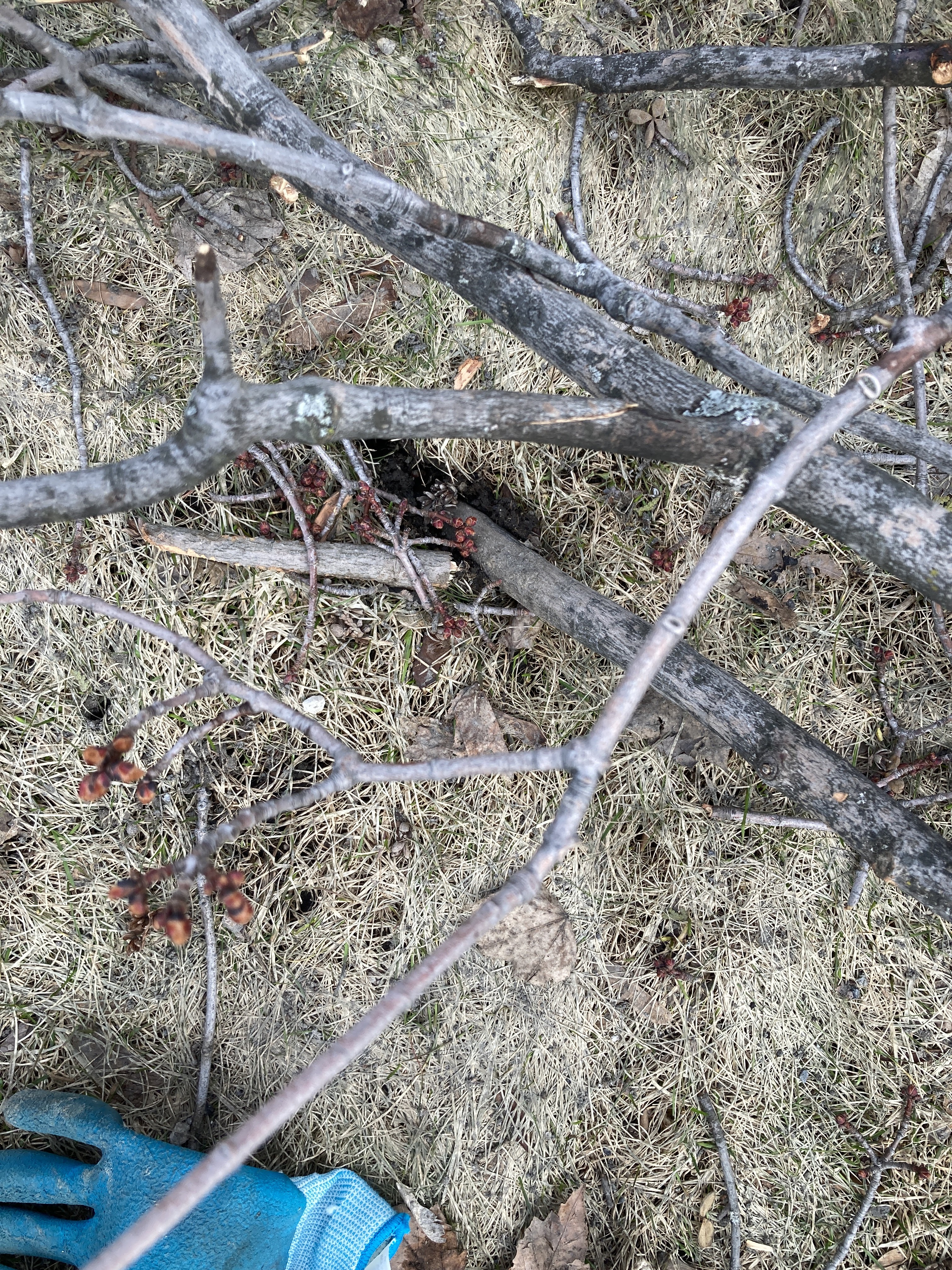
The ice storm aftermath was obvious on the streets, and in the parks.


These branches were driven with such force into the earth that I had to pull hard to get them out!

Sitting out on the front porch, with electricity and hot water, it seemed like a good day to celebrate and open my 50th birthday personal champagne bottle!


Despite my neighbour winning the biggest pile of snow all winter, I had the last laugh, with the last of the snow in evidence anywhere on our street!


Christmas lights finally came down.


Solar lamps came out, and spreading joy on the very first evening!


A LONG WALK ON A NICE DAY

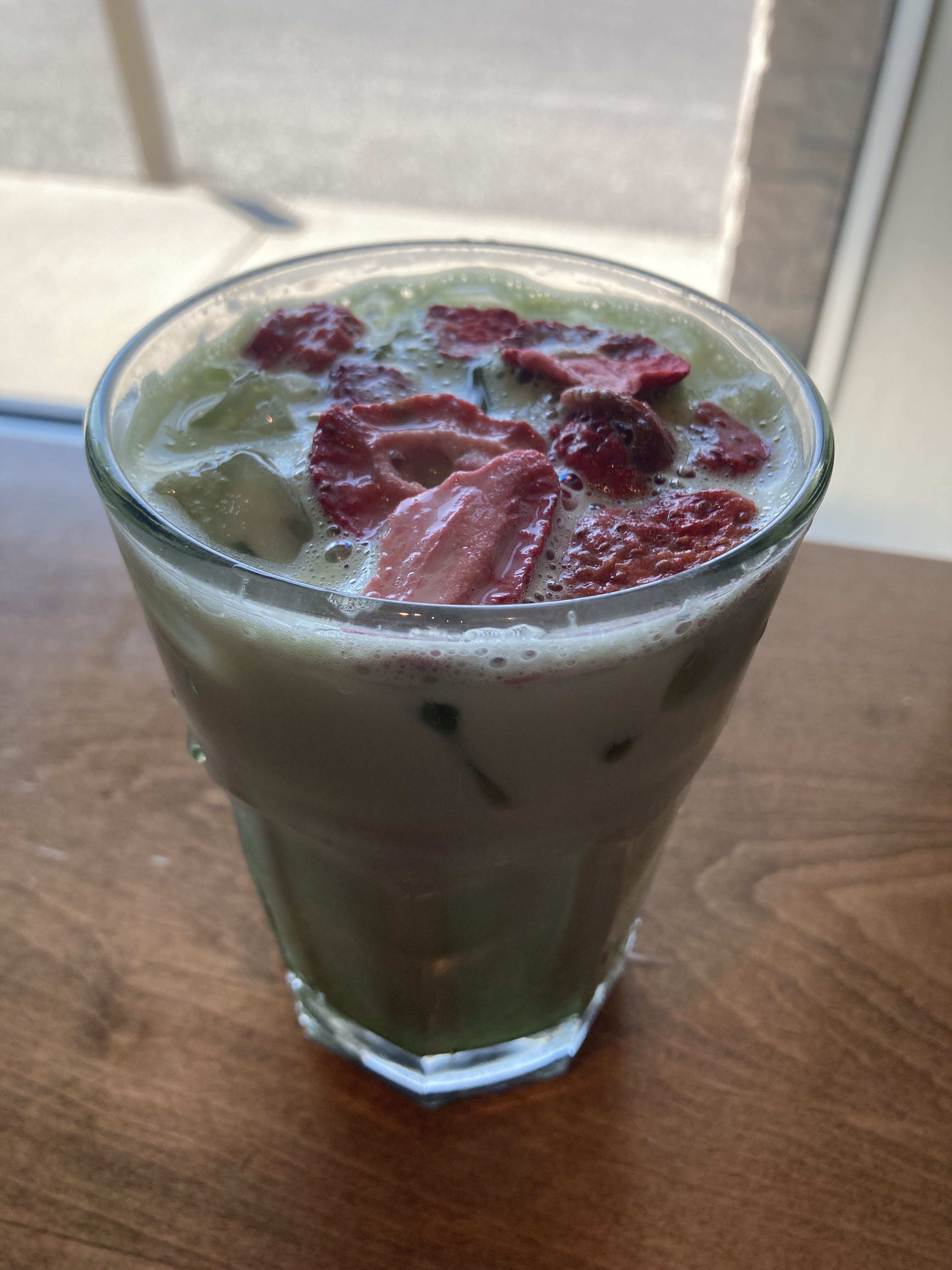
I walked to my "nearby " Starbucks for a Saturday morning treat. It's a five kilometer walk each way, but the sun was shining, the snow was nearly gone, and I was dressed just right. I felt like trying a matcha Latte, but when I got there, this Iced strawberry oat version was advertised. I got the smallest version, special ordered the glass (this is the only place I can get this special treatment, and it's only just come back post covid restrictions). It was creamy and smooth, with the rehydrating strawberries not quite as advertised (floating in suspension, not clumped on top for a weird sensory experience). I sat in a sunny window and enjoyed the cold drink. Thanks, Nath! Always grateful that you keep me in Starbucks certificates!


POKE MONSTER VEGETARIAN BOWL


This is one of those meals that you think, if I was stranded on a desert island, and I would have to eat only one meal for the rest of my life, this might be the one to choose. 

It's delicious, complex, and layered with flavours and good protein energy still hard to find in the vegetarian fare of today.

I broke down the ingredients. Here's how to make it at home:

Fill the bowl with warm sushi rice, seasoned with sweetened rice vinegar. 

Sprinkle with black sesame.

Shred iceberg lettuce and carrots, and finely dice cucumber.

Layer them with some avocado in sections, to cover rice.

Drizzle with soya sauce.

Cook edamame and fry breaded firm tofu in strips. 

Layer the top with the tofu and edamame still warm.

Add a generous amount of spicy mayo. 

Add a generous amount of chilled seaweed salad (with black and white sesame).

Finish by sprinkling some strips of finely cut nori on top.

Delicious!


BACHELORETTE PIZZA

 They say that a married man lives longer than a bachelor, because his wife looks out for his diet more than if he didn't have her influence. A single woman is supposed to live longer than a married one, but sometimes I think my choices might land me in between. 

I thought I would try a frozen pizza instead of making too much pizza (homemade dough always make two!), or spending the money on takeout. I thought the mushroom coverage was pretty generous in the picture, and the alfredo sauce seemed like an interesting idea. 

All in all, the pizza cooked up yeasty and golden, like a good homemade version. I loved the mushrooms, but I still prefer them on tomato sauce. Not bad for four meals. I probably should have had salad with all them, but nobody's perfect!


GIVING THANKS WITH GREAT NEIGHBOURS

 We had the nicest day on Saturday, and my neighbours got their lawn furniture out and a few of us stopped in to join them and catch up with their dad who was there for the afternoon. Their daughter was away at a cottage, so they were cooking up a turkey that had made it through the ice storm, but they thought they should cook up sooner rather than later.

After these past three years of isolation, I was happy to be a social flexitarian and join them, and an impromptu group of neighbours for a turkey meal with all the fixings.

Here's my plate, and the lovely pair in their element.


BASIC GOURMET GIRL FARE

 It's been a long time since my Martha Stewart entertaining days. Good days are fast prepared meals, in the oven or stovetop, or a series of favourite sandwiches. Not much of my food is instagram worthy, and certainly not at home. But I do eat, and I try new things so I will use a few of my recent photos to get back to the original idea for this blog: Gourmet Girl, even if "gourmet" is not exactly what I am eating or preparing!

For example, while my daughter was away on a class trip, I decided to try something hot.  In the past, I had bought by request the Cheetos mild version, and it was pretty good. I decided to try the Flaming Hot Cheetos mac n' cheese, and it really looked so red that it was worrying!

While the result was much spicier than my daughter would ever have tried, there was this other flavour that didn't really suit me. Given that the vibrancy of the colour was not proportional to the heat, I thought it might be red pepper. Definitely fun to try once, but I will not need to repeat it!


Sunday, April 16, 2023

CELEBRATING EASTER WITH AN EASTER EGG HUNT

 When you work shift work, you know that you won't be able to celebrate every holiday on the day. For me, better late than never. So when Princess Pirate was away for the holiday, I decorated anyway, and she knew as soon as she set her suitcase down that there was easter candy to find!

I remember fondly how excited she was in past years, not only to find the eggs and other treasures, but how delighted she was in making an Easter Egg Hunt for me in return!

There aren't a lot of decorations, but some go way back to former crafting days. It gives me great pleasure to put things up in celebration of new life at spring equinox!


Monday, April 3, 2023

2006

Precious child
Warm and heavy
Asleep in my arms
Smiling unconsciously
Toothless grin
Dreaming of your last drink
Nothing dearer, sweeter, more beautiful
Exhausted, red eyes roving
Stench of urine
Vomit stained shirt
Why, homeless man, do you seem less human?
My baby daughter wears your same perfume


Sunday, April 2, 2023

FARMERS, DINOSAURS, AND THE EASTEND MUSEUM

 I started this blog over ten years ago, and it hinged on two initial places: my fangirling of Rick Steves in  his home town of Edmonds, WA, and an elevating visit to a friend and her family in Eastend, SK. I realize now that I should have celebrated that anniversary, and noted the 1000's blog entry!

Tonight, I am returning to Eastend, to piece together a story about a farmer who married my friend, his uncle, some dinosaur bones, and a little town museum called the Eastend Historical Museum.

I don't know what kid doesn't get a little obsessed with dinosaurs. Growing up in Regina, we had a mechanical roaring dinosaur in our provincial natural history museum. My parents took our family to Drumheller, AB one summer to visit the Royal Tyrell Museum near there. I have visited the New York Natural History museum and shown the skeletons to my daughter in various places, not least of which is an outdoor walk at the Granby Zoo.


Our favourite museum to house dinosaurs became McGill's Redpath Museum, a treasure trove of many curiosities, not least of which is a Triceratops skull called "Sara", that was discovered in Eastend.

When I visited my friend years ago, I enjoyed visiting the Eastend Museum a lot. There were two things were really memorable: a woman's group called the Rebekah Lodge (I had never heard of a sisterhood equivalent to all the fraternal lodges I had heard of over the years), and the discovery of dinosaur bones near my friend's farm.

I went to University with Krista, and we attended the same church, frequenting the College and Career Group many weekends. She moved to Eastend after she married Warren, a farmer with family who also farmed in the area. On the wall of the museum, there was a display including photos about the fossil find of a 60% complete skeleton of a Brontothere, a prehistoric animal that resembles a rhino with a split horn. Thanks to the local enthusiasm of an amateur paleontologist named Corky Jones, people in the area were inspired to keep an eye open for unusual finds in the area. One day in 1973, near the farm of my friend Warren's Uncle Bud, road repairs done by neighbour Ken Wills unearthed some bones. Bud, Ken, and another neighbour named Victor collected the Brontothere's bones. They are displayed in the museum, along with cast of a Triceratops skull and the "second shield" of a Torosaurus.

On following visits, we were able to visit the larger museum called T.rex Discovery Centre, opened in 1991 in part due to another discovery even more impressive of a skeleton of a Tyrannosaurus rex that became known as "Scotty". 

What I have learned over the years is that fossils are incredibly heavy, too heavy to be displayed as a skeleton of a dinosaur. Most of what we like to see on display are casts of the fossils, allowing them to hang suspended from the ceiling, or stand impressively in museum rooms to be admired. 

The showstopper at Redpath Museum

If you do have the chance though, visit a dinosaur museum near you. Ask if you can hold a fossil and compare it to a cast, so you can feel the difference in weight. Notice what is a fossil, what is a bone, and what is a casting. And you can touch the coprolites without even getting your hands dirty! That is some heavy @#$%!

Monday, February 27, 2023

DANA K WHITE’S CLEANING ROUTINE (THAT AWKWARD MOM REVIEW)

DAILY FOUR

Make bed

Do your dishes

Put away dishes 

Five minute cleanup 

WEEKLY FIVE

Pick a day for each one

Grocery/errands

Laundry - it’s okay to watch a video while you fold!

Bathrooms

Dust with microfibre/Vacuum

Mopping


BIOLOGY

 FIVE Fs

Flora

Fauna

Fungi

Fish

Fowl

Monday, February 20, 2023

THINGS I LEARNED WHILE PAINTING

It’s coming on half a year since I got my windows replaced, and I still haven’t managed to repair the plaster damage and repaint in order to put my window coverings back up. So it was partly due to a continued avoidance, but with a great number of good reasons to do it, that I found myself prepping and painting the downstairs walls of my child’s makeshift bedroom. 

Even while trying to do the most preparation possible, I was on a tight timeline, and the first limitation was the limits of the drop cloth. I decided to do three wall, and I had to remove some of the baseboards to remove a length of cable that had been serving no purpose for many years. In doing so, I uncovered a section of plaster that had been caved in and plastered over, and removed a section. I had to decide if I was going to paint three walls, or fix a 1foot square piece of plaster, so I have the walls done, but a hole that looks perfect for a safe, if it wasn’t right at the base of a wall. I have to cut it back more than the edge of the studs so that I can screw in the sides to finish, hopefully this week.

So what I remembered from other painting experiences is that you can cover the wall fastest with a combination of cutting in edges (before and after rolling, to get two layers in at the edges of the walls. I had paint that was low in VOCs, so this was the first thing that I learned after feeling a little dizzy an hour or so in.

1. Just because you are using eco paint, and the smell is way less, you still should be wearing an N95 mask and ventilating the space! It’s never too late, and it’s only necessary while you are painting, and an extra hour or two.

2. Painting a ceiling sucks, but it gives you the opportunity for a clean slate. Wow, does it look better! If you like to paint and can’t do ceilings (looking up is not safe for everyone and can probably hurt your neck and back more easily), hire someone! I am just glad for a standard house with a ceiling height of max 8 feet. The light and drama in a cathedral ceiling is wonderful, but it must be a real challenge to paint!

3. Painting tape can be minimized with planning, but with an accent wall, it’s important to know how to use it. Apply it well, but go over it so that the important edge is really stuck down. Don’t let the paint dry fully. Take it off within the hour, by taking the end, and pulling it into a 90 degree angle away from the wall, forming a triangular point at the bottom as you go. Use an exacto knife to cut the paint, if it sticks, so that you don’t strip off the thin plastic edge of your beautiful acrylic paint job. 

4. Paint really close to your plugs and light switches. It’s really easy to leave too much of a margin, and then you have to do it again. 

5. Light your area really well. Since it’s best that you remove any light or socket covering that you can, you may have even less light, and daylight is not ideal. A good light will let you seen those chunks of paint before they are permanent, and help you see where you missed a spot before you put everything away.

6. Don’t worry if the paint looks weird on the wall when it’s wet. Worry if it still looks weird when it’s dry. I had a beautiful « wolf gray » that my daughter was excited for, and had a tiny heart attack when it went on very lavender. I love a purple flower, but we both dislike it in our decorating. When it dried, it was a beautiful (not at all purple) gray. 

7.  Don’t try and do « one last thing » if you have already removed your painting clothes or eye protection. Take the time to put it back on. I had put every thing away, « only « had to hammer the metal tin lid down to keep it sealed. Thanks to a few generous streaks of paint that shot out around the lid during the process, and despite immediate attempts at cleaning, I now have a « painting sweater » I never needed!

8. Dress light. Paint gets you sweaty at times, and it is an unpleasant experience to be around, even if you are alone. Stay cool, not stinky!

NB These are not in the right order, so I hope you read them all to the end, before you started! Good luck!


Thursday, February 16, 2023

INDIANA JONES

Raiders of the Lost Ark 

WARNINGS: gratuitous violence, grotesqueness, sexism, racism

TO NOTE: iconic scenes, the genesis of the adventurous archeologist (hat wearing, lasso lashing hero afraid of snakes!)

Having been double crossed by a couple of Peruvian tour guides, and outsmarting numerous booby traps as well as outrunning the cinematic rolling stone, India Jones loses the golden statue he obtained to his nemesis, a French archeologist working with the Nazis. 

After returning home to teach at University (in an unclear, but likely New England state), he is recruited to look find the Lost Ark before the Nazis do. He flies to Nepal to get a headpiece possessed by a former girlfriend that he had jilted (when in a less than clearly consensual relationship with a someone of lesser status, and possibly a minor), where he manages to rescue her after contributing to burning down her business all at once. Indy and Marion leave with the relic, but the Nazi has a copy burned into his hand from when he picked up the relic that had been heated by the fire, and follow them.

They fly to Cairo, and joined by an Egyptian ally and Rhesus monkey, he loses Marion in a gun battle, and the monkey dies, eating the poisoned dates before Indy does. 

In an underground trove of Egyptian treasures, Indy attaches the headpiece to the top of a staff , and lines up the sunlight to a miniature plan of the city, and finds the next destination. He finds Marion in a compromised situation, and leaves her on her own, still tied up and gagged. Fortunately, she makes her way out on her own, but only after changing into a backless white dress picked out by the French archeologist, which will be increasingly ripped to shreds (torn first to a more practical and shorter length by Indy himself) and filthy with dirt by the time they get to port.

With a team of Egyptians, in the midst of a thunderstorm at dusk,  they unearth the entrance to a chamber filled with snakes, which Indy hates.

While  has to dress up to keep the French professor occupied, Indy torches the snakes and lifts the ark of the covenant out with the help of his friend and two poles, the bird’s faces covered in modesty with outstretched wings, before they are discovered by the French and Germans. Marion is dumped unceremoniously into the chamber, catching herself on an enormous statue of a dog god,  before falling into Indy’s arms. 

They escape, with a fight scene on a moving Nazi plane and a fistfight with a large German ending in a near escape land an explosion. Then Indy on horseback follows the convoy taking the ark, and hijacks the army vehicle, cavalierly knocking innocent people over, and brutally murdering others in his quest to recapture the ark, before being hidden in Omar’s garage. 

Marion finally gets a change of clothes, but it is still white, and it is not really clothes, but a satin nightgown. She tries to nurse his wounds, while he complains about all the places he hurts until he finds a few space places, from his left elbow, his forehead, his right cheek, and his lips, in a sweet goodnight before he falls into an exhausted sleep.

Somehow Indy manages to ride the Uboat (how lucky is for it not to go underwater!) without being drowned or discovered, and manages to threaten the parade with a rocket launcher. The Frenchman calls his bluff  (a fly dies in the discourse!), knowing he won’t blow up this precious piece of history.    

On an isolated Greek island, and wearing a high priest’s garb, the Frenchman releases spirits that destroy all who all look at them, with grotesque and macabre results. Only Indy and Marion are spared, eyes closed, and sweating from the heat.

Returning to DC, Indy is paid, and the bureaucracy assures everyone that the ark will be studied carefully. Instead, and probably for the best, the ark is nailed into a generic crate marked TOP SECRET and placed with thousands of other similar crates to be stored in obscurity.


Sunday, February 5, 2023

ABANDON ALL HOPE, ALL YE WHO ENTER HERE

Lasciate ogni speranza, voi che entrate

I mistook this for Latin in Season 3 Episode 7 of Dickinson, and looked it up to add it to my list of contemporary phrases. I was wrong! It’s Italian, and it’s from Dante’s Divine Comedy. The poem refers to a journey that Dante takes, guided by Virgil.  It refers to what is written on the gates to Hell as they pass through, and it is usually translated as «  Abandon all hope, all ye who enter here ».

Thursday, February 2, 2023

WINTER: A CBC MASSEY LECTURE SERIES

Five Windows on the Season

by Adam Gopnik

CBC Massey Lecturer, and American moved to Montreal (Habitat 67), living in NYC


First Thematic Note: Romantic Winter: bleak and bitter to sweet and sublime

Second Note: Radical Winter: how words get woven around Arctic expeditions

Third Note: Recuperative Winter: how the secularization of Christmas invented a new idea of sacred

Fourth Note: Recreational Winter: a chance to talk at length about hockey

Fifth note: Remembering Winter:sweetness made from stress

REVIEW:

This book was the perfect read for this snowy January. Although I would have enjoyed it a little more cleaned up, I respect the writer’s desire to mimic a conversation, and his use of a small group recording to capture this free flow. 

I loved the reflection on how we have come to romanticize winter (since the advent of reliable indoor heating), how we have foolishly pushed the limits of cold in futile adventures to the poles but continue to admire these traits, how the Christmas season evolved, how winter sports became a important focus, and how our memories of winter will change, especially in light of global warming. 

The works of art he chose and included in the center of the book, are wonderfully representative of his themes. Many of them were familiar, and all of them are evocative.

 A book worth reading on cold days under a cozy blanket.

ROMANTIC WINTER

Vivaldi’s Winter of his Four Seasons 1725

Sirocco, Boreas, winds at war

The Snow Man by Wallace Stevens

Poet William Cowper The Winter Evening 1785 « fireside enjoyments »

Poet Samuel Taylor Coleridge goes walking in Germany »What sublime scenery »

Edmund Burke on the sublime and the beautiful - that beauty is multifaceted and spans the entirety of human sympathy- not just the perfect, or safe, or comfortable. That dangerous, imperfect, uncomfortable things are beautiful too, even winter.

In 19th century, sublime was used for everything!

Picturesque represents pretty cozy nature. Sublime covers scary, awe-inspiring nature.

German Romantics 

Painter Caspar David Friedrich (painting on the Baltic island of Rügen) - lost his 13 year old brother in a skating accident falling through the ice to drown

1819 Monastery Graveyard in the Snow, Chasseur in the Forest, Sea of Ice 1824

German, Romantic resistance to the Enlightenment’s idea of reason, French army

Winter is the red pill of the matrix, an awakened northern consciousness, scary winter is bitter, but the truth. The matrix is the blue pill, sweet winter, but a lie

Winter, the sleep of nature, brings forth imagination.

Hans Christian Andersen’s The Snow Queen 1845

The hero, Kay, gets a chip of glass in his eye (from an evil goblin’s mirror ) and it distorts his vision. He sees a snowflake, and its intricate internal form, and thinks it’s more beautiful than a flower. The Snow Queen sits in the middle fo a broken Mirror of Reason, and represents someone who confuses cold death with warm life. She reigns between the classical Christian idea of a bad, dangerous north, to be escaped and the romantic idea of an alluring, seductive north. 

Composer Franz Schubert Winterreise

Eisblumen (hoarfrost) - Goethe and Knebel, friends, debate about whether the patterns of « ice flowers » that develop on the window were the hand of God, or just crystals. Goethe scientifically felt that they were not alive, so they were not real. As a form of mimicry, he saw them as dead, and not romantic.

Impressionists like Lauren Harris’ icebergs and mountains

Russia and Canada are places that cannot escape winter. When Napoleon is defeated in the campaign of 1812 by Russian winter, the patriots appreciate for the first time its poetic nature. 

Prince Piotr Vyazemsky writes First Snow, as though it was a first love. His best friend Alexander Pushkin writs Winter Morning, and notes the paradox of winter (winter impedes, but also makes possible an accelerated travel). New roads not possible in spring and fall, are frozen and passable, making sleigh travel possible, with furs and secrets and eroticism only possible by the winter season.

Christmas Parables by Charles Dickens

This window of winter is « exterior », looking from inside out.


RADICAL WINTER

Extreme opposite to summer - Winter evening vs Summer afternoon

Demeter is in mourning for her daughter, kidnapped and taken to the underworld by Hades

Before central heating and other modern conveniences, winter was survived. It was scary. It was uncomfortable.

Ice age 50,000 years ago

1550-1850 Europe’s mini »ice-age »

White Christmas is the norm in 18th century literature, Holland’s canals froze over

Shakespeare’s Love’s Labour Lost « when icicles hang »

Dr Samuel Johnson The Winter’s Walk 1747

The sober neoclassical Augustine view of winter - impressive but fundamentally negative

Frankenstein, Poe’s The Narrative of Arthur Gordon Pym, Lewis’ Hunting of the Snark (Bellman’s map, Boojum )- allude to the foolhardy attempts for the Northwest passage (WASP existential test, « no point to it but the point of doing it ») of Franklin and Scott (The Worst Journey of the World « Polar exploration is at once the cleanest and the most isolated way of having a bad time which has yet to be devised »), Cook « Alfred Dreyfus of the North, and Peary (supported by the National Geographic Society)

South Pole - Scott (Lawrence Oates »I am just going outside and may be some time »), Shackleton

Greenland’s Inuit (called Eskimo highlanders, by the British)- used three meteorites - the Tent, the Woman, the Dog - for tools - Robert Peary took them and sold them to NYC Natural history museum


RECUPERATIVE WINTER

Winter solstice -Roman Saturnalia(Jupiter’s banished father, Kronos), Roman Kalends, Yule, festivals of light, Jan 6th epiphany

Reversal Feasts - Halloween

Renewal Feasts - Thanksgiving, July 4th

Christmas is a compound festival - sacred at the 25th, reversal at Yule/Cinder claus - lump of coal - Jesus born to die

Mythology of modern Christmas - Northern protestants - in response to Puritans banishing Christmas(17th C London), Plymouth attempts fail

Mass urban poverty 1830s1840s - political reform responses: liberal economist John Stuart Mill, revolution by Marx and Engels - brought on romantic heroic leadership

Dickens A Christmas Carol - Trollope spoofs with a Jewish secular holiday

Thomas Nast NY cartoonist Santa Claus illustration 1862 

union army « The South has chivalry, but we have Santa »

post civil war rise of commercialism

1867 Macy’s open to midnight (Enchanted Forest, Ogilvy’s)

1871 Carols, cards, official holiday Britain and USA

Victorian German traditions of Yule

1914 Christmas truce on the Western Front

1940 psychological literature notes the conflict of hope and hopelessness

1944 musical WHAuden’s For the Time Being 

1946 Frank Capra film It’s a Wonderful Life

Tension between the material and the spiritual Christmas; secular and sacred


RECREATIONAL WINTER

Johann Strauss’ Skater’s Waltz (https://youtu.be/isvt802U8BY)

Dutch become royals in 1600s, and the Thames freezes for the winter in 1689, bringing skates to England

Skating as movement

Skating as social- “a carved-out social space in which we find ourselves alone”, requiring common preparation, but then performed alone

Skating as sexy, “sport as an alternative to sex”

Figure skating invented by Jackson Haines, accepted first in Europe, including music, jumps, spins, arabesques, and pirouettes (England school of skating and America’s lack of arenas were factors

Britain had a “military” style called “combination skating”, resulting in “international style” as it exists today, and English style, which has been lost to us

Team sports, and spectator sports became popular agains in the last half of the 19th century, with golf,  football, and baseball championships starting in the 1860s. 

Sponsors from department stores, factories,and newspapers begin. 

Labour solidarity allowed for weekends, so teams could play Fridays and Sundays. 

Olympic amateurism is sponsored by Baron Coubertin, with a common cause; rebound Romanticism; tending to morality, discipline, militarism, anti-sexual, purity, renewal, social engagement. 

Team sports are a complex balance between solidarity and rivalry. Where politics highlight social difference and aim to end it, sports dramatic use social difference and tries to perpetuate it, creating tribal passions with a parody of war, but played for fun.

*Ernest Hemingway wrote for the Toronto Star during WWI about winter sports, using vocabulary for luge and sledding that will end up informing his writing about the bullfight

Hockey invented by an NS raised engineer (Creighton) in Montreal with the Grand Trunk Railroad to extend rugby into the winter season. The first large rink in Canada was the Victoria Skating Rink in Montreal, sitting between Drummond and Stanley. Hockey became a hybrid of sport, and association; with team play, self-policing, and violence; a collision combination of control sports (like football) and collision sports (like rugby).

Two solitudes: English and French, Prosperous Scottish (McGill) and  Pious Roman Catholic, Sun Life (Dominion) building, St Joseph’s Oratory. The Irish were English AND Roman Catholic, so the hockey teams were a trio, with the Irish switching between the two others. McGill Redmen, and Montagnards and Shamrocks (Point St Charles). 

Open information game-both sides see the same thing eg chess, basketball

Closed information game- surprise matters eg poker, football ?hockey

Team sports- Clan vs craft sport

Spatial intelligence- Wayne Gretzky credited for “seeing the ice”

Sports fan- “pitiful vicarious identification”


REMEMBERING WINTER

Vernalisation- refers to seeds- thriving in spring depends on survival through a cold winter

Winter stress makes summer sweetness

Joni Mitchell River(Blue) -Aden Bowman, Saskatoon, sang around campfires at Waskesiu 

“Winter adds depth and darkness to life as well as to literature…a culture based on joy is bound to be shallow.” Derek Walcottt Nobel acceptance speech

“Winter-the dead season, the off-season, the bleak season in which we store our own sense of the past.”

Three losses-

1 Being removed by climate control, technology, architecture 

2 Objectively, by global warming

3 Winter and the idea of its memory 

Paris rinks “ice palace”

”juking” from school

“Winter cities movement” -includes Montreal’s underground city - visionary planner American emigre Vincent Ponte (immortalized at Place Ville Marie)- over 20 miles long, sixty separate real estate complexes (some public some private, ten metro stations, two commuter rail stations and two regional bus stations, 2000 stores, 2000 housing units, 200 restaurants, banks, movie theater, convention centres

Pointe and I M Pie came to Montreal as architects in 1959 at developer Zeckendorf’s urging to rebuild the gash left by building the railway

In 1961, the “second city” underground started, with the assurance that every thing underground would be public, and networked together with a below grade train. A pedestrian city. Montrealers have a choice between a winter city or an underground one.

In Canada, unlike, USA, digging underground is not owned by the building above it, but by the government of Canada unless a treaty is in place. 

City Lights: A Street Life - a memoir by Keith Waterhouse - walking around Leeds in the 1930s

Jane Jacobs - urban philosopher - cities are self-organizing

In the Middle Ages, Jewish synagogues were not allowed to be built higher that church steeples, so they dug down.

Ponte designed a similar underground city in Dallas, which failed (not based on subways, people traveling in cars don’t go underground in the same way, and above ground doesn’t exist in the same way)

Past the tipping point -2007-Frost above the Arctic circle couldn’t keep up with the melt of summer

Polar bears turn to cannibalism in face of the loss of ice

Coastal communities being displaced

2005 Sheila Watt-Cloutier presented to the Inter-American Commission of Human Rights - polluters are violating others “right to be cold”


Hunter in the woods by Caspar


INTUITIVE EATING: A REVOLUTIONARY PROGRAM THAT WORKS

I am not sure if some of my irritation with this book was simple transference at the voice actress that performed the reading of the audiobook. I do think that there are some good messages and information in this book, but it sure took a while to get there.

I am triggered by nutritionists that state that we should avoid food rules, but then come up with their top ten rules (“principles”) to follow. These authors were no different, using at different times catastrophizing examples (falling into a “black whole”) or idealizing outcomes unrealistically (and she never binged again...). While this kind of language is so hard to avoid in a conversation, there was no need for these extremes to remain in the edited updated edition of this book.

I also found it very frustrating for the application of intuitive eating to be constantly referred to as such a natural ideal, when it took almost to the end of the book to tell any stories of true pathology where this was applied in a more realistic way. 

Lastly, I think there is a major issue with calling dietary “rules” like finishing your plate, or eating dessert only if you exercise “Diet Police”. Police enforce the laws, but they don’t make them. It’s nonsense to me that because you know of a rule that the police are uniformly enforcing it. Most often you have a choice without the police being involved at all. I didn’t think this was the right metaphor, and it just contributed to my doubts about these rules being any different than those being discouraged against.

While this may be a book worth reading, do not be surprised or discouraged by a constant feeling of being judged for not being a natural intuitive eater, and do not expect that you can become one without many failures, difficulties, and judgement. In my experience, a lot more people struggle with this than have success.

Also, the deemphasis on nutrition (step ten out of ten) is strange. Intuitive eating seems easy when your meal is your mother’s breast milk, and provides complete nutrition. It’s essential to understand that it’s easy to miss something major in your diet and become deficient in it. Vitamin D, B12, iodine, and other necessary compounds won’t give you natural feedback that you are lacking while you are eating intuitively.

LUDMILA CURILOVA

 Ludmila Curilova is a Toronto based artist from Moldova. I remember seeing her artwork almost two decades ago in Beaurepaire Village at the Chase Gallery. I was thinking of her today, and looked through the available paintings on the gallery’s website, her personal webpage, and google images. I was unable to find the pieces I remember, but there were some beautiful pieces that I enjoyed. They are certainly rifs on the theme that I remember: a poised woman with a fetching hat, and a repeating pattern. There were not as many textured spirals as I remember, but I enjoyed the variety of her female portraits, especially with the inspirations of Klimt and Chagall in some of her more recent works.

I couldn’t find the credit or confirmation of this painting, but it very well represents what I remember her earlier work to be.